Are Friends really friends forever?

We’ve all had friends in our lives. Some are what we call best friends. We keep in touch with them through the years, and they are there when you need them.

Some friends are temporary; they are in our lives for a period of time, and then they are gone. This doesn’t make them bad friends. But, sometimes, circumstances cause separation. It might be distance or even walks of life, but they were in our lives for a time and a purpose.

Then there are those we might refer to (as the scripture says) as unreliable friends. There are many we considered friends that are no longer in our lives. At some point, for some reason, they have distanced themselves from us. I’ve found this happens with age. As we get older, the people we thought were friends are no longer there for us or have little or no time for us.

We are Blessed that there is someone who is always there for us, and we can call a friend.

Let’s understand something. Many of us have earthly friends who are there for us through thick and thin.

The friend the verse from Proverbs is speaking of is Jesus. Yes, we’ve all heard and even sung the song, “What a friend we have in Jesus.” But Jesus is much more than that. He’s always there for us, no matter what. He won’t let us down (although, at times, we all believe He does); Jesus is always there for us and always listens to us.

It would be rather arrogant of us to believe we are always right and always have the correct answers. Speaking from experience, I can tell you that’s just not true. Jesus knows what’s best for us and when it’s the right time for Him to answer our prayers.

Feeling alone? Do you feel like you have no friends and no one cares about you? First of all, that is not true. Whether you realize it or not, there are people in this world who care about you.

But when those moments of the blues engulf you, and you feel you’re all alone, just remember:

Nothing can separate us from God’s love

I imagine we’ve all felt separated from God at one time or another in our lives. Tragedy hits, someone dies, a family member becomes deathly ill, or we may even lose our job. Then, we ask the question, “Where’s God in all this.”

How can we not ask that question? So many negative things occur to us throughout our lives. The important thing is to get past our earthly problems and know that God is by our side.

I’ve been retired from full-time ministry for over 6 ½ years. During that time, my wife Kathy was diagnosed with progressive M.S. She had surgery to remove a foot of her bowel for pre-cancerous lesions. Yet, through all of that, she remained faithful.

Since my retirement, I’ve had 6 surgeries and other illnesses. I can’t say I recall saying, “There is no God; if there was, He wouldn’t allow this to happen.”

Actually, quite the opposite has happened. I may moan and groan occasionally, but my faith is just as strong, if not stronger than it was 6 ½ years ago.

God is always with us, no matter what. And we need to remember that.

In his book, James says:

James tells us that trials (such as illness or death of a loved one) test our faith, but this faith gives us “perseverance” to keep our eye on the prize. That prize is life eternal with Jesus.

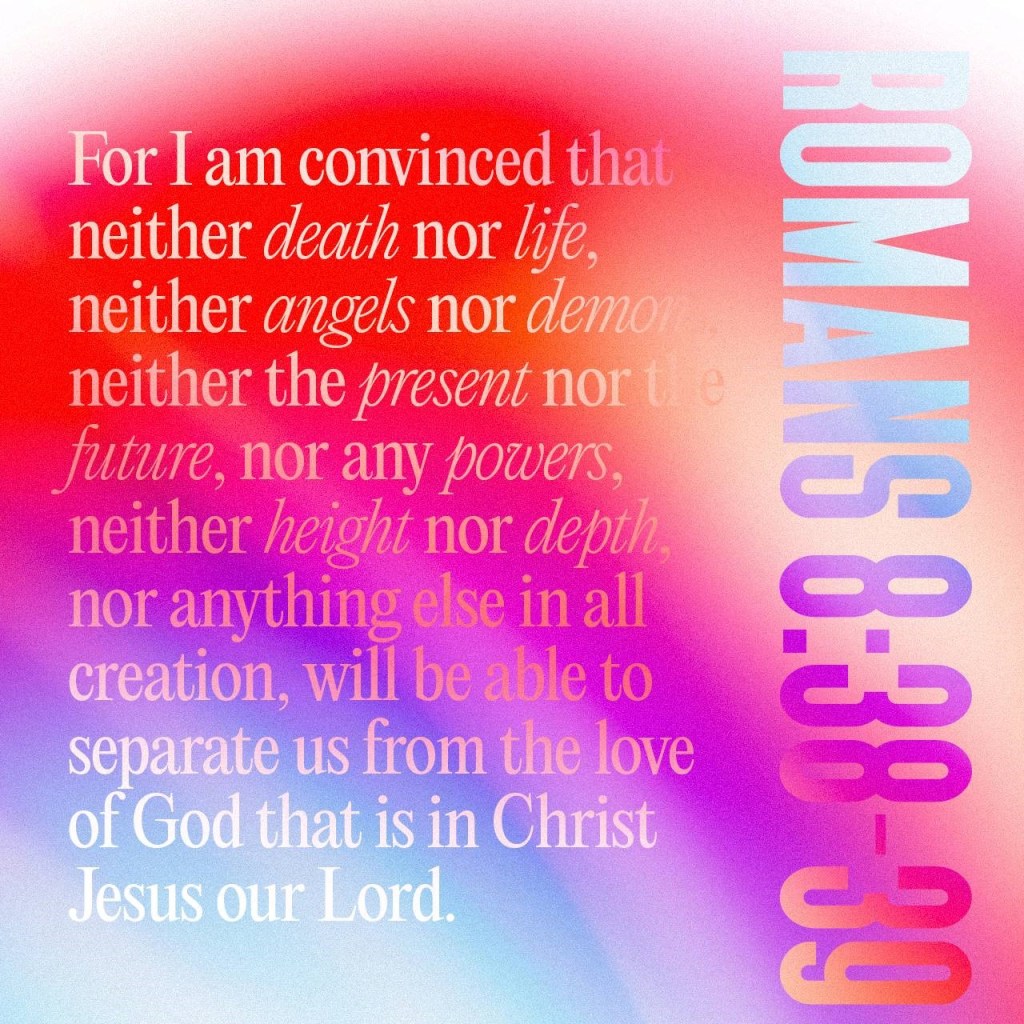
Romans 8:35-39 speaks to this issue in a broader context. Nothing can separate us from the “Love of God that is in Christ Jesus our Lord.” Although many hardships will come our way, you and I must be strong and persevere over them.

Yes, we will have problems in this world, and sometimes they may seem never-ending. But nothing can separate us from the love of God, that is, in Christ Jesus our Lord.

As I said earlier, we all have problems in this world. Many of you have had many more than the ones I mentioned earlier that have assailed my family. Never give up. Know that God loves you and will help you through all of them.

We’re all lost until we find Jesus

If the pictures above don’t paint a thousand words, then I’ll come right out and tell you. I lost my cell phone again. When I say again, I’m talking about multiple losses in the last few years.

About five years ago, I left my wife’s and my cell phones on top of the car. About halfway to our destination, I heard a noise outside the vehicle. That’s when I remembered I had left our cell phones on top of the car. After over an hour of searching on Highway 528 in Cape Canaveral, I found them. Kathy’s was in one piece and only slightly damaged because it was in its case. On the other hand, Mine was not so lucky; it was in two pieces and destroyed.

About a year ago, once again, I left my phone on the top of my car. It fell off as I was turning onto the entrance once again to Highway 528. I was going the other way this time, and I never recovered it.

Finally, this past Sunday, my wife and I went to church, and I put my phone in the Bible holder in the pew. After church, we stopped at the supermarket on the way home from church when I realized I didn’t have my phone. I drove back to church but couldn’t find it. Over the next 24 hours, an elder looked for my phone, as well as my Pastor and his wife. No luck. I guess I left it on the car again, and it fell off. I now have a new phone, once again. My phone was lost, but I found a new one at the Boost store.

I am sharing my phone story to tell you this. I, like most of you, was lost at one time, and then I was found.

I’m talking, of course, of being a lost human until I found Jesus. That may seem a bit cliché, but it’s true. We were all lost at one time or another. Some of us have found our way, others have not. Here’s an example from the book of Luke.

We’ve all heard this story before. From the time we were in Sunday school to a Sunday sermon, we all know about Zacchaeus. He was the lowest of the low in the eyes of the people; Zacchaeus was “A Tax Collector.”

Tax Collectors were known to cheat the citizens, and Zacchaeus came right out and admitted it.

We don’t know what transpired at Zacchaeus’ home, nor do we know what was said. But we do know that Zacchaeus became a believer that day. He repented of his sins and became a follower of Christ.

If you take the time to read the Gospels, you’ll find numerous incidents of sinners repenting and becoming followers of Jesus.

We all lose things. Sometimes, we find them; other times, like me and my lost phone(s), we don’t find them (At least not in good condition).

No matter what earthly thing we have lost, we can never lose Jesus. We may have lost our way, but He is always there, willing to welcome us with open arms.

God’s Defensive and Offensive Weapons

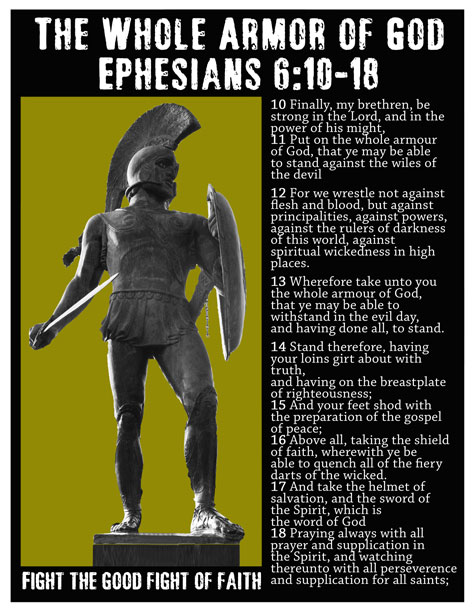
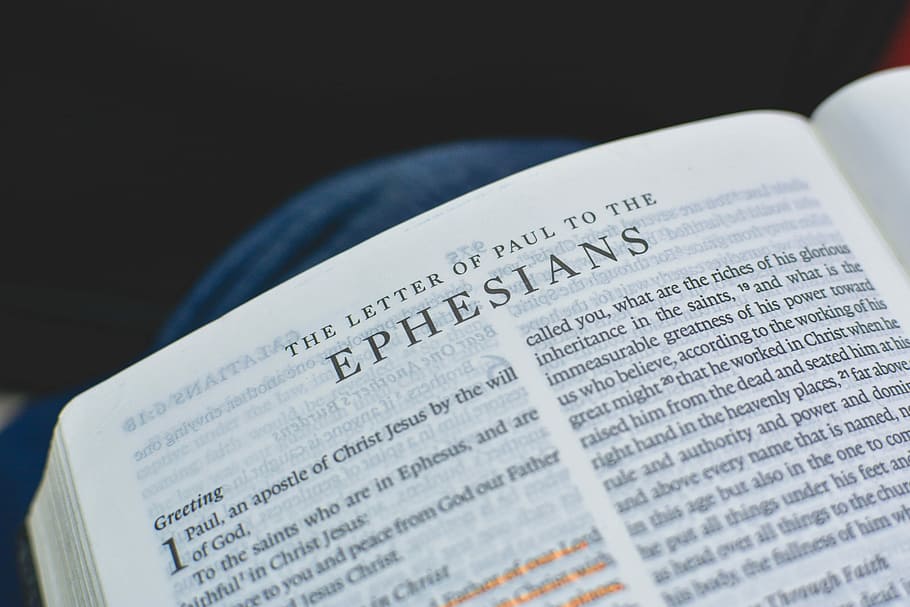
In today’s final lesson from the book of Ephesians, Paul discusses the “Full Armor of God.”

On a secular level, he’s describing the standard armor of a Roman soldier. But spiritually, Paul is talking about something entirely different. He speaks of five defensive pieces of armor that the Roman soldiers wore and one that was offensive.

Let’s take a look at Paul’s description of the “Full Armor of God” in detail.

As I mentioned earlier, five of the six pieces of armor Paul mentions are defensive. The soldier’s belt, breastplate, and feet which are fitted with the proper kind of footwear for battle, shield, and helmet. Each of these five pieces of armor are attached to a soldier’s body, while his sword (the sixth piece of armor mentioned) is either carried in his hand or kept close in a scabbard.

It’s noteworthy to ask why Paul uses a Roman soldier’s armor as an example. Actually, there’s a good reason. First of all, Roman soldiers were everywhere in Paul’s day, so they were relatable. Second, Paul used each part of a Roman soldier’s protective armor as an example of how Gentiles should stave off attacks by the devil.

Truth, righteousness, gospel (foot protection), faith, and salvation are all part of what Christ has done for us. These are our defenses against the devil’s attack.

But that’s only five pieces of armor. Those are our defenses against Satan’s attacks. The sixth piece of armor is an offensive weapon.

Of course, we find God’s Word in the Bible.

Paul concludes the book of Ephesians talking about prayer.

Finally, Paul ask us to pray in two ways.

First, he tells us that we should lift up all kinds of prayers and requests through God’s Holy Spirit. There are no limits to what we can pray for. As I’ve mentioned before, we may not necessarily like God’s answer, which, at times, is no answer at all. But, we should pray. And Paul distinctly tells the Ephesians and us to pray for all the Lord’s people. In other words, it’s not all about you!

Then Paul asked for the people of Ephesus to pray for him. At this time, Paul is writing from Rome, where he is under house arrest. Although he is in chains, he will continue preaching, teaching, and spreading the Good News of Jesus Christ.

Honor and Obey

The Bible first tells us about honoring our parents in the Ten Commandments.

Paul repeats this commandment once again In Ephesians 6:1-3:

Paul doesn’t just tell the Ephesians and us to honor our parents, but to do it:

Paul is not telling us that our parents will beat us bloody if we disobey them. But he is saying that we face God’s wrath by not honoring and obeying our parents.

In today’s reading, Paul discusses being obedient and honorable to parents and how parents should treat their children.

Finally, as it was prevalent and part of the society in Ephesus, Paul discusses how slaves should be obedient to their masters. There is also an expectation that the Master will respectfully treat his or her slaves.

Let’s take a look at today’s verses.

As I already discussed the section on children obeying and honoring their parents, let us move on to the next section.

The dictionary definition of exasperate is:

Instead of frustrating our children, Paul calls upon the Galatians and us to:

The Greek word for training implies discipline and correction. Sure, there are times when “We’ve had it” with our kids. But, if we discipline and correct them properly and bring them up in a Godly household, we will hopefully have success in their upbringing.

Finally, Paul discusses slaves and masters. Obviously, as Christians, we don’t believe in slavery. And, you’ll notice that Paul neither condemns nor condones slavery. But it needs to be addressed as Paul is speaking to new Christians in writing to the Ephesians. This includes slave and Master.

Although slavery was a way of life, both slave and Master needed to be treated in a Christian manner.

Paul tells the slaves to:

Earthly slavery is a temporary circumstance. Paul is telling slaves to make the best of it. And by obeying, respecting, and fearing their earthly masters, their heavenly reward is much better than any earthly reward they could receive.

At the same time, Paul doesn’t forget the masters.

Paul tells the Galatian Christian slave owners to treat their slaves with respect. God in heaven is the Master of both slave and slave owners. He shows no favoritism towards either one. His expectations toward one group of people are the same as they are toward another.

Love and Respect

Here’s something I found very interesting. When I Googled the word submit, many definitions from different sites came up. But, when I Googled images of the word submit, none of them had anything to do with being submissive to another.

All of the icons referred to submitting something. For instance, you might submit a manuscript for a book. You may also submit your homework or application for any number of things.

As Americans, we as a people don’t like to submit to others. We often see it on the news, where someone won’t submit to the authorities. Perhaps you don’t like the rules at your job and don’t want to submit to them. And, if you look back at the 1930s and 40s, we definitely were not going to submit to tyranny.

And then there’s marriage. Our country’s divorce rate is more than 50%. We are a very independent society and do not like to submit to each other.

But someone has to be in charge. You and I are not the President, a member of  Congress, and most of us are not police officers.

In today’s reading, Paul says the same thing about marriage. Someone has to be in charge. Yet look at the first line in today’s reading:

Let’s take a look at today’s reading in its entirety.

During my years in ministry and beyond, I’ve known many women and men who dislike this passage. Many people feel it puts women subservient to men. The passage depicts men as the head of the household. I think we all know that this is not always true.

As I said earlier, the first line of this passage says:

In a marriage, we all (both men and women) have responsibilities. Many times, those responsibilities are dictated by life’s circumstances. In my home, I guess one might say I needed to assume being the head of household even more so after my wife was diagnosed with M.S. In the years since Kathy’s diagnosis, my household responsibilities have dramatically increased due to the decline of her physical abilities. But we still discuss expenses, bill paying, and our financial future. In “our” household, we still pray together, and Christ comes first, or at least we strive for that.

It’s essential to understand what is important and the order of importance.

Or as Lee Iacocca, former CEO of Chrysler, said:

I’ve said all the above to help you to understand that every household is different by necessity.

This passage needs to be considered whole, not in pieces. Paul is not saying a woman should be a man’s slave. In so many words, Paul is telling women to let the man assume the leadership role in the family. Again, we all know that is not always possible or feasible.

Now look at what Paul goes on to say:

I cannot read and see this passage other than a man putting his wife on a pedestal. No, a husband isn’t supposed to worship his wife. But, she should be very important to him. If a man is emulating Christ in His love for the Church:

Every team (even a marriage) needs a leader. At times, once again, because of circumstances that leadership may change. But Paul is saying, out of our reverence for Christ, the man should take the lead role (whenever that is possible).

Of course, this passage is speaking of a traditional family. But we all know that many families are single-parent households, and tradition gets thrown out the window. There are many families in this country and world where there is no father head due to any number of circumstances. The most important thing to remember, no matter what your family looks like, is always make God the most important thing in your home.

Paul speaks about several things a man and a woman should do. But his final statement really seals the deal.

Love and respect. A man should love his wife, as he does himself. And the wife must respect her husband. Their relationship may be give and take, but ultimately a marriage is strong because of Christ in the home and a man and woman’s love and respect for each other.

A Fragrant Offering

There’s nothing quite as good as the fragrance of a pie in the oven. The aroma reaches throughout the house and just makes you say, “Ahhh.” The above photo is of a blueberry pie I made on Thursday.

I must say it didn’t disappoint. The taste was every bit as good as the aroma.

Another calming aroma is the smell of a scented candle. As you can see in the picture below, Kathy and I have a lot of scented Yankee Candles. Actually, what you see in the photo doesn’t include all of the candles we have throughout the house. Our favorite scents are the fragrances available in the fall and around Christmas (my favorite is the Balsam and Cedar candle; it’s like being in the middle of a tree farm every time you light it.)

In today’s reading from Ephesians, Paul talks about Jesus’ sacrifice on the cross being a, “Fragrant offering and sacrifice to God.”

Yes, Jesus was a fragrant offering that God the Father finds pleasing. That’s Paul’s speaking the Gospel of love. But then, he continues with some stern warnings about Christian living. Let’s look at today’s passage and some of Paul’s cautions.

After Paul speaks of Jesus’ sacrifice and what a fragrant offering He is, he jumps into Christian Living again. Paul begins by directly talking about sexual immorality.

Paul dives right into sexual immorality. Some of the things he says may seem obscure. But Paul isn’t speaking of just sex outside the boundaries of marriage. He also speaks of obscenity, coarse joking, and foolish talk.

Paul says:

Paul takes on the second commandment and ties it to the sixth. If people are consistently sexually immoral, impure, and greedy and that makes them, or us, idolaters.

Acting in this manner leaves you open to God’s wrath. And as the Galatians/we disobey God in this manner, there is no room for them in His world.

Paul continues to encourage the Galatians and us to live Godly lives and act in a way that is pleasing to God. Unfortunately, so many people don’t live up to God’s expectations.

This section reminds me so much of the “Parable of the Sower.”

Paul is encouraging us to be more like the good seed.

Again, Paul returns to how we should praise God in all things.

Paul encourages everyone to take the time to understand God’s will for them.

Interestingly Paul tells the Galatians, as well as all of his readers, not only to not get drunk, or filled up with spirits, as we now refer to alcoholic beverages. This leads to debauchery, which is:

So, Paul comes full circle, once again speaking of the 6th commandment.

Instead of filling our bodies with spirits, we should allow ourselves to be filled with the Holy Spirit. If we do this, we will praise God in every form (song, praise, and worship) for everything He has done for us. Especially for he fragrant offering of His Son, Jesus, as a living sacrifice for us.

What is Christian Living?

In today’s verses, Paul explicitly describes what you must do to live as a Christian.

Before we look at several of Paul’s detailed remarks, let’s take a look at what Evangelist Billy Graham lists as principles for Christian Living.

  1. Read your Bible daily. Do not be content to skim through a chapter merely to satisfy your conscience. Hide the Word of God in your heart. It comforts, guides, corrects, encourages – all we need is there.
  2. Learn the secret of prayer. Prayer is communicating. Every prayer that you pray will be answered. Sometimes that answer may be “Yes,” and sometimes “No,” and sometimes, it is “Wait,” but nevertheless, it will be answered.
  3. Rely constantly on the Holy Spirit. We know that the Holy Spirit prays for us (Romans 8), and what a comfort that should be to the weakest of us. Stand aside and let Him take over all the choices and decisions of your life.
  4. Attend church regularly. The visible church is Christ’s organization upon earth. Christians need one another, we need to gather together to worship God, and nothing can take the place of church attendance.
  5. Be a witnessing Christian. We witness in two ways: by life and by word – and the two, where possible, should go hand in hand.
  6. Let love be the ruling principle of your life. Jesus said to those who followed Him, “By this shall all men know that ye are my disciples if ye have love one to another” (John 13:35). The greatest demonstration of the fact that we are Christians is that we love one another.
  7. Be an obedient Christian. Let Christ have first place in all the choices of your life.
  8. Learn how to meet temptation. Temptation is not sin. It is yielding that is sin. Let Christ, through the Holy Spirit, do the fighting for you.
  9. Be a wholesome Christian. Our lives and appearance should commend the Gospel and make it attractive to others.
  10. Live above your circumstances. Don’t let your circumstances get you down. Learn to live graciously within them, realizing the Lord Himself is with you.

You’ll notice as we continue that Paul’s guidelines fit very nicely into Bill Graham’s guidelines. Although Paul’s are more specific. Let’s take a look at today’s verses.

I chose four passages from today’s reading to look at regarding Christian Living.

In this passage, Paul talks about our old self and new self.

Of course, our old self is the way the Ephesians and ourselves used to act and think before Jesus came into our lives. We can look back to Genesis, where Satan lied to Adam and Eve, as he always does.

But now, Paul tells us not to be corrupted by Satan’s influence. Instead, we are to put on a new self because we have been recreated to be like God. Because of Jesus’ death on the cross, we have been re-created in His likeness.

The call for us to put on the new self encompasses both numbers 8 & 9 of Billy Graham’s principles. (Reread above Pg.1)

Another principle Paul touches on is anger.

You’ll notice that Paul says, “In your anger, do not sin.” Many of us have come to believe that anger is a sin. No, it’s not.

The second part of this verse hits closest to home for me.

I can remember sitting with the Priest (As I mentioned earlier, I was brought up Catholic) in private counseling before Kathy and I were married almost 50 years ago. He emphasized the point of not going to bed mad at each other. I can probably count on one hand how many times we’ve done that. If left to brew overnight, the anger can fester and become a sin.

(Check out Billy Graham’s 6th point once again.)

Next comes my least favorite because when I was younger (I still occasionally slip), I had a very foul mouth.

Unwholesome talk is not only a sin, but using it toward others can invoke anger. On more than one occasion, I used, let’s say, bad words toward others. Unfortunately, not only is it wrong to do so, but it can provoke the other person’s anger to the point of a physical altercation. I often ended up on the short end of the stick in those situations.

People need to be built up and treated honorably and lovingly.

(Billy Graham’s 6th, 8th and 9th points come to mind)

Finally, we come to Paul’s final point in today’s verses.

I already spoke about a couple of Paul’s negatives. Now, he’s making a point of showing the opposites of Christian living and how we should live. The negatives are relatively obvious. So, let me just reiterate the positives.

Be kind to one another. Be compassionate to those in need of compassion. And when you or someone else ‘screws’ up, forgive each other. The forgiving part may seem like a difficult thing to do. Anytime you have a problem with forgiveness, imagine Jesus on the cross and how He forgave you by taking each and every one of your sins upon himself.

(Reread Billy Graham’s principal’s, especially 5-10)

Humility and Patience, it’s not easy

I’m sure most of you remember the song by Mac Davis, “It Hard to Be Humble.” Here are some of the lyrics from the song’s chorus:

You might say that the person in the song is slightly cocky.

The songwriter’s cockiness about humility is quite the opposite of what Paul says in today’s passage.

No matter what we may think of another person, even if they are cocky, a loudmouth, or if they think that they are always right. God wants us to be gentle and patient with them while showing them love. No, that isn’t the easiest thing in the world to do.

Let’s look at Paul’s words in today’s passage and get some clarification.

Paul begins by saying:

Paul is a called servant and ambassador of the Lord. As such, he encourages the Ephesians to follow their own calling as servants of the Lord. He urges them to find the proper balance between their Spiritual lives and the world.

Now we come to the passage I spoke of during my introduction.

First, Paul urges the Ephesians and us to be humble, patient, and gentle. We do this by being selfless, in other words, putting others needs ahead of our own. Paul calls for an Agape love, which is unconditional love.

Next, we mustn’t spoil the Holy Spirit’s work. We are to be at peace with each other. The Holy Spirit brings believers to Christ. Isn’t it then logical that we love one another, no matter what?

Paul now speaks of the unity of the church. He mentions seven ways it is unified. The first three:

The church is one body and of one Spirit. We are called to “one” hope. That hope is the knowing hope that we are saved by Jesus’ death and resurrection.

The next unifying elements of the church are:

Jews and Gentiles are unified under one Lord, one Faith (we believe the same thing), and one baptism.

The seventh unifying element makes our Faith complete.

There’s not much to say here. Paul tells us that God the Father is over everything. God’s grace has blessed us forever in Christ.

(I’m going to jump ahead a bit here. My belief is that some of Paul’s words are self-explanatory. I also have to remind myself not to immerse myself or you too deeply into these verses. This is a devotion, not a Bible study. 🙂

Although the passage above is self-explanatory, it’s important to reiterate and reinforce Paul’s point. God doesn’t leave us alone to fend for ourselves or learn on our own.

Jesus put people in charge, i.e., prophets, teachers, etc. To equip us to better understand the unity He expects and the Faith He desires from us.

In conclusion, Paul wraps up his point of unity.

As it is for every Christian, our duty is to speak the truth. We don’t spread false doctrine but pass on what we know to be true. And we do so in love, as we want everyone to be saved.

We all have our part to do. Yet, like a human body is held together by ligaments and bones, Christ holds us together as one Body.

May each of us grow strong in Christ as we spread the good news of Jesus Christ in the way God has chosen us to do so. In humility, with patience, and love. Amen.

Prayer is important

I’ve discussed this before, but it’s good to revisit it occasionally. What’s your prayer life like? God wants us to come to Him in prayer. He wants us to ask for our needs, our wants, and for help.

Interestingly enough, God knows what you and I need before we even open our mouths or think a thought. But, He still wants you to ask.

So, I ask you once again, what’s your prayer life like?

I feel my prayer life is anything but perfect. Why? Because we can never come to God often enough. Nor can we achieve the perfection He expects from us.

But, it is good to have a “prayer routine” of sorts. I’m not telling you or anyone to do what I do, nor am I showing off and saying, “Look what I do!”

But here it is:

Each day after I get up and get the coffee going, I head to the family room and turn on my phone.

Occasionally I get sidetracked by current events, but generally, I go directly to bible.com. There, I read the devotion of the day, which includes a short story/devotion and a prayer, as well as the verse of the day.

I always highlight the verse of the day. I then look at the many pictures that Bible.com has with the verse. I generally pick one and save it to “photos” on my phone. I do this, so I can peruse them when I want to and occasionally use one in a devotion I’m writing.

Of course, morning isn’t my only prayer time. I pray throughout the day as need or want arises, and my wife and I pray at all meals, whether we are at home at someone’s house for dinner or at a restaurant.

Catching people watching Kathy and I pray at a restaurant is always interesting. I’m unsure if they are thinking to themselves, I’m dumb or doing it to be noticed, impressed, or waiting for something magical to happen. 😊

When I go to bed, I pray again. Nothing fancy or detailed. I thank God for the day, ask for a good night’s sleep, and for things to come.

None of what I just described to you is fancy. My wife and I pray from our hearts. Why? We’re alive, we breathe, and we have a mission. God’s.

Today’s devotion from the Apostle Paul is a prayer. He is praying for the believers in Ephesus. And his prayers are specific.

In the very first line of this passage, Paul says:

Paul is doing something right from the get-go of this passage that isn’t done as much as it used to. He kneels.

It’s interesting to note the number of Churches I’ve been to over the years that have removed or don’t utilize the kneelers.

I’m not here to tell everyone to kneel. I was brought up (Catholic) doing it. I believe it is a posture of submission and surrender to Christ.

Twice in these verses, Paul mentions the words prayer. The first:

Paul is asking that God give the believers of Ephesus spiritual strength. He asks that the Holy Spirit be strong within the Ephesians. This Spiritual strength allows Jesus to live within us because of our faith in him.

In his very next sentence (a rather lengthy one at that Paul continues to pray.

It may appear on the surface that Paul is praying that the Ephesians have knowledge. But they already have that; instead, Paul asks them to be blessed with comprehension.

(rote memorization simply means learning through repetition)

Paul concludes this intercessory prayer with a doxology.

He is praising God. God is more powerful than we can ever imagine. We can come to Him in prayer whenever we want to, and He won’t turn us away. He (God) will always be with us through His Son, Jesus Christ.