Living on the other side of history

In the late 1980s and early 1990s, Hannah Barbera (Creators of cartoons such as Yogi Bear, The Flintstones, and Jetsons) came out with a Biblically-based series of cartoons. This animated series was called “The Greatest Adventure: Stories from the Bible.”

The series was an ‘animated direct-to-video series that tells of three young adventurers who travel back in time to watch biblical events take place.’ In the series, the three main characters travel to Old and New Testament locations to experience the Bible stories from a Christian perspective.

What would it be like to be sent back in time to observe some of the Biblical stories we’ve all learned over the years? Right now, we live on this side of history. So, we know the stories and often understand the stories’ hows and whys.

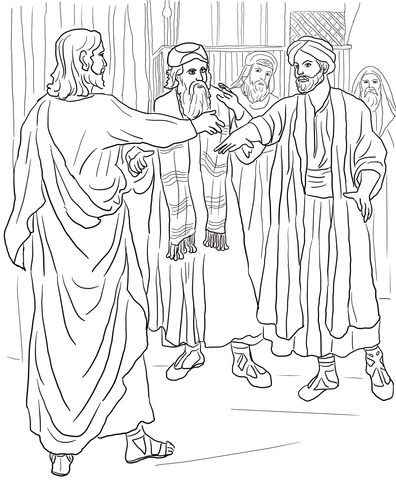
Let’s read about another of Jesus’ miracles, in which the Pharisees observed Him healing a man on the Sabbath.

“Another time, Jesus went into the synagogue, and a man with a shriveled hand was there. Some of them were looking for a reason to accuse Jesus, so they watched him closely to see if he would heal him on the Sabbath. Jesus said to the man with the shriveled hand, 

He looked around at them in anger and, deeply distressed at their stubborn hearts, said to the man, 

He stretched it out, and his hand was completely restored. Then the Pharisees went out and began to plot with the Herodians how they might kill Jesus.”

This story is pretty straightforward. Jesus is teaching at the synagogue on the Sabbath. The Jewish Sabbath had many laws, disallowing people from doing much of anything. No working in the fields, cooking, baking, and kindling a fire are just a handful of the no-nos during the Sabbath in Jesus’s day. Here’s what the book of Exodus says about observing the Sabbath.

The Pharisees were waiting for Jesus to perform a miracle on the Sabbath because they felt it was work. Thus, if Jesus healed the man with the withered hand, Jesus would be breaking one of God’s commandments, and they could rightly accuse Him.

Jesus knew what the Pharisee’s thoughts were. Jesus told the man to stand up and then said to him, Stretch out your hand.” Jesus never said, “You are healed,” or, “Your sins are forgiven.” Technically, He had not broken the law.

But the Pharisees saw it differently and hated Him even more. So, along with the Herodians (Jews who followed Herod and the Roman Empire), they began plotting a way to kill Him.

Wow! It’s Saturday (The Jewish Sabbath), and Jesus is preaching in the synagogue. He heals a man with a withered hand without saying a word about healing. And now, they want to kill Jesus.

Let’s go back to what I said in the beginning. You and I are living on this side of history. We have the entire Bible to help us understand God’s purpose, goals, love, plan, and forgiveness.

As I mentioned earlier in this devotion, what if you and I were on the other side of history. We’re sent back in a time machine to the time of Jesus. But we no longer have the whole story; we no longer understand God’s plan fully. As a Jew, what would your reaction be to Jesus’ teaching and miracles? Would you be a follower or a Pharisee, a teacher of the law, or a Herodian? Would you be in awe of Jesus? Or would you want to put Him to death because of His teachings?

These are questions to think about that can help us read and understand the Bible objectively. Ponder these thoughts today.

Who Do You Say I Am?

Have you ever played the game of “Heads Up?”

It’s available as a box game, or you can use your cell phone to play it. It’s a pretty simple game that is along the lines of charades. You can either have a headband around your head with a card facing out towards your partner(s). You can also download the app for the game on your phone. Then, you place your phone facing outward against your forehead.

The card or phone can have the name of a famous person, place, thing, song, etc. My favorite is when the name of a well-known person comes up, and your partner has to give you clues about who the person is. You have a certain amount of time to guess the famous person’s name from their hints.

It’s a pretty hilarious game, as you try to give clues to the person holding the card or phone without saying the person’s name, place, or thing.

In the Gospel of Mark, Jesus asks His disciples two questions. In this case, it’s not a game; it’s a test.

“Jesus and his disciples left Galilee and went up to the villages near Caesarea Philippi. As they were walking along, he asked them, 

“Well,” they replied, “some say John the Baptist, some say Elijah, and others say you are one of the other prophets.”

Then he asked them,

Peter replied, “You are the Messiah.”

But Jesus warned them not to tell anyone about him.”

At this still-early point in Jesus’ ministry, His disciples had witnessed many things. They had seen Jesus heal the sick and lame, drive out evil spirits, show love, and empathize with others. They also heard Him speak with authority concerning God, heaven, hell, and what was right and wrong.

Now, we find the disciples walking with Jesus near Caesarea Philippi when He turns to them and asks question number one.

Don’t think for an instant that they gave Jesus a quick reply. He had caught them off guard with this question quite out of the blue. I’m sure they all looked at each other to say, “Well, we’ve talked about this amongst ourselves, but we never expected Jesus to ask us about it.”

The passage gives the impression that the question was asked for anyone to answer. It seems that’s what happened. Several of the disciples responded:

Fair enough, they were all right answers. But then came the million-dollar question. This was a one-question test Jesus was administering. Had the disciples been paying attention? Over their many months together, had they realized who He was?

The first question was easy. This one was loaded. Can you see all of the disciple’s mouths slightly opening as their eyes turn toward each other, with all of them finally falling on the most outspoken person in the group?

Bam! Bells go off, a buzzer rings, and confetti falls from above. Heads Up, they won. The disciples got it. Jesus’ time with them had paid off.

Messiah and the words Jesus are both defined as “The anointed one.” Jesus was consecrated and appointed by God. Although the disciples understood who he was, they had yet to fully realize that He was indeed a King and Priest. Jesus was here not to rule but to offer Himself as a sacrifice for everyone.

Jesus Heals a Paralytic Man

One of the many favorite songs of Sunday school children is, “I just wanna be a sheep.” One of the verses goes like this:

It’s a fun kid’s song, yet it also hits the nail on the head. The Pharisees were not fair men. There was only one way to live, their way.

A loose interpretation of the word Pharisee is “separated ones.”

Let’s take a few moments to look at the Gospel of Luke 5:17-26, which deals with yet another of Jesus’ miracles.

“One day, while Jesus was teaching, some Pharisees and teachers of religious law were sitting nearby. (It seemed that these men showed up from every village in all Galilee and Judea, as well as from Jerusalem.) And the Lord’s healing power was strongly with Jesus.

Some men came carrying a paralyzed man on a sleeping mat. They tried to take him inside to Jesus, but they couldn’t reach him because of the crowd. So, they went up to the roof and took off some tiles. Then they lowered the sick man on his mat down into the crowd, right in front of Jesus. Seeing their faith, Jesus said to the man, 

But the Pharisees and teachers of religious law said to themselves, “Who does he think he is? That’s blasphemy! Only God can forgive sins!”

Jesus knew what they were thinking, so he asked them, 

And immediately, as everyone watched, the man jumped up, picked up his mat, and went home praising God. Everyone was gripped with great wonder and awe, and they praised God, exclaiming, “We have seen amazing things today!”

This is another story of Jesus that is just as much about faith as it is about healing. We find Jesus teaching in a house in Capernaum. We also know there are Pharisees and teachers of the law (also called scribes or lawyers in some texts), and they are there to check this “Jesus guy” out.

People have begun following Jesus wherever He goes. In this particular case, a house Jesus is visiting is jammed full of people. And so many people are outside you can’t get near the door.

So, four men whose friend is a paralytic use their ingenuity to get to Jesus. They climbed onto the house’s roof, removing tiles from the ceiling. They then lowered their sick friend into the room before Jesus.

Think about these actions from the perspective of faith. The paralytic had been this way for a long time, and he had a lot of time to think about his illness. He believed that Jesus had the power to heal him. The man’s friends, too, had faith. They didn’t give up because the door of the house was blocked. They climbed the roof of the home while carrying their friend! That takes strong faith.

Jesus saw their faith and said,

Hold on! This paralyzed man wanted to be healed of his illness, and Jesus tells him that his sins are forgiven? Let’s look at this in two ways. First, in Jesus’ day, many Jews believed that your illnesses were a manifestation of your sins. So many people may have looked at this man as a sinner because of his ailment. Second, Jesus did heal the man of his sins.

Now comes the part where we find out something new about Jesus. He knows what people are thinking and what is upon their heart. (Jesus is Omniscient, all-knowing) Jesus knew what the Pharisees and teachers of the law were thinking. In their minds, Jesus was not God, so He could not forgive sins. They saw Jesus as a blasphemer. But Jesus knew what they were thinking. Jesus may have said to himself,

So, Jesus told the paralytic to get up, take his mat, and go home. And that’s precisely what he did.

Can you imagine the room at that moment? There was somewhere between dead silence with some saying, “Oh my.” I suppose there were a lot of jaws dropping to the floor. Although the Pharisees and teachers of the law were still unconvinced by what had occurred, the others in the room said it was “remarkable.”

It was remarkable because Jesus is remarkable. He is the Christ, the Son of God.

Jesus Heals a Centurion’s Servant

I was a grocery manager for Albertson’s supermarkets a little over forty years ago. Albertson’s management philosophy was aggressive. The style came out of WWII. You gave orders, and you expected them to be followed to the letter. This management style was embedded in my values in just a few years. If I said, “Jump” to an employee, all I wanted to hear as a reply was, “How high?”

It’s sad because I also utilized that management style at home with my wife. It took me several years to realize something after I left Albertson’s. I was not loving and caring for my family; instead, I was managing them.

Early on, I discovered that this working style with people didn’t work at all in the church. As a church worker, you cannot boss people around and tell volunteers what to do as if they were soldiers. Instead, church ministry takes teamwork, love, and empathy between staff and congregation.

In Matthew and Luke’s Gospels, we find the story of Jesus’ healing of the Centurion’s servant.

The Centurion was a captain in the Roman army. As his title depicts, he was in charge of 100 soldiers. This story is indeed about remote healing by Jesus, but it is even more important as a story of faith.

Not unlike my experience as a manager at Albertson’s supermarkets, the Centurion tells people what to do.

The passage above tells us that the Centurion understood that Jesus was a man of authority. He had either heard about Christ’s healing powers or had seen them himself.

The Centurion felt that he, as a gentile, was unworthy of having Jesus step into his home. Yet, he believed that Jesus could heal his servant even from afar. So first, the Centurion sent Jewish leaders who respected him to ask Jesus to heal his servant. Later, he sent friends to avoid the embarrassment of Jesus coming into his home and any for Jesus by entering a gentile’s home.

Jesus felt the Centurion’s faith was stronger than any He had ever seen. So, He healed his servant as asked.

Matthew 7:7-8 says:

The Centurion ‘asked,’ which Jesus tells us to do. Through the church elders, he sought after Jesus, and he knocked by sending his friends to Jesus.

Think about what happened for a moment. Jesus was not in the presence of the servant when He healed him. Why? Because of his master’s (the Centurions) faith. (The door was opened because of his faith)

We do the same thing every time we pray. Yes, Jesus is with us always. Through our prayers, we ask Jesus to heal, bless, and provide for us from afar.

We do so because we believe that Jesus can heal, provide for us, and bless us because we have faith in Him. So, we pray because we have faith like the Centurion did.

Jesus Heals a Man with Leprosy

Several years ago, our country and the world were overrun by a very infectious and deadly disease, Covid 19. If we tested positive for the virus, we were and still are asked to stay in isolation for a certain period of time, even if we are not symptomatic. We were asked to wear masks in public and to remain socially distant from others. It was a challenging time. Particularly because we as individuals crave human contact.

2000 years ago, Levitical law required lepers to let people know that they were sick by calling out to them, “unclean, unclean.” This way, people learned to stay away from the leper.

In the story of Jesus healing the leper, this man did not follow that Levitical law:

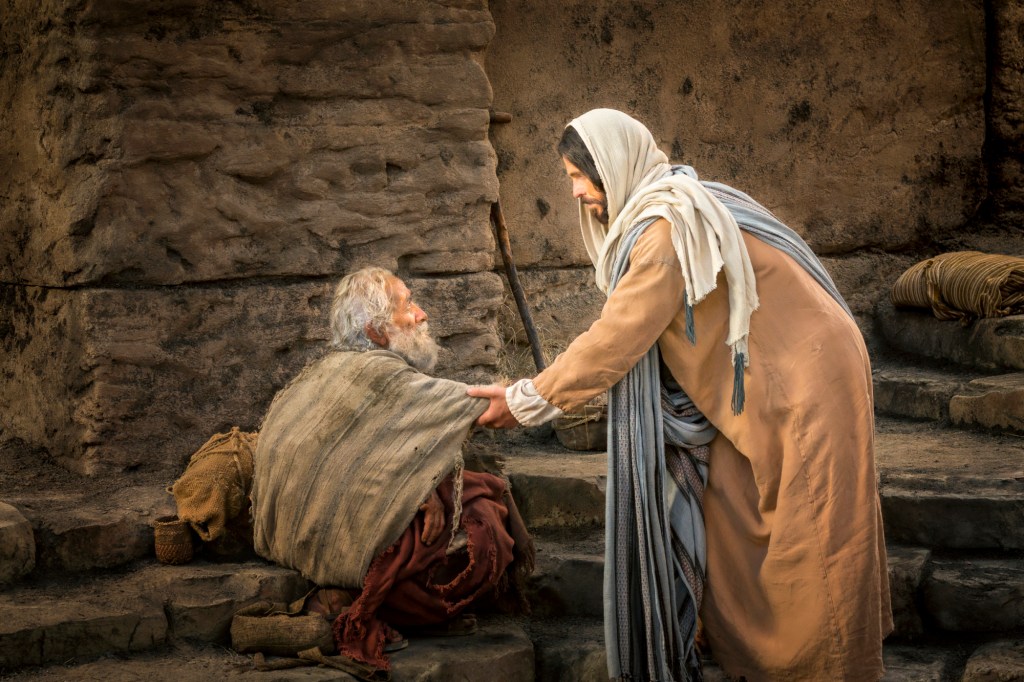
“In one of the villages, Jesus met a man with an advanced case of leprosy. When the man saw Jesus, he bowed with his face to the ground, begging to be healed. “Lord,” he said, “if you are willing, you can heal me and make me clean.”

And instantly, the leprosy disappeared. Then Jesus instructed him not to tell anyone what had happened.

But despite Jesus’ instructions, the report of his power spread even faster, and vast crowds came to hear him preach and to be healed of their diseases. But Jesus often withdrew to the wilderness for prayer.”

You’ll notice in the passage above that the man with leprosy did not yell out, “Unclean, unclean.” Do you know why?

Because he was afraid that if he did, he would be stopped from approaching Jesus. The man believed in Christ’s healing powers and wasn’t about to let anyone stand in his way, even if it meant breaking the law. (If we’re honest with ourselves, if we were in the same condition, we’d probably do the same thing.)

In fact, Jesus, too, broke a Levitical law just by touching the man. He would have been considered unclean also. But instead of Jesus catching the disease because He touched the man, His mere touch healed him.

Jesus knew the power He was endowed with. And once again, He was willing to heal anyone who came to Him and asked.

Unfortunately, the cleansed man did not follow all of Jesus’ instructions. He went out and started telling everyone what Jesus had done (Mark 1:45). This caused even more people to want to come to Jesus to be healed. Because of this, Jesus had to slip away to remote places to get away from the crowds and pray.

This story has a couple of points.

First, Jesus continues to heal anyone He comes upon. Second, we need to follow Christ’s instructions to the letter. If Jesus tells us to help and give to others secretly, that’s what we should do. When Jesus instructs us to pray a certain way, that’s how we should pray. Not explicitly following His instructions can cause problems for ourselves and others.

Take some time today to ask for your needs in prayer. Lift them up to the heavens. And, when He responds, follow His instruction to the letter.

Yes, Jesus is a healer. But His and our purpose is to share the Gospel message with the world.

The First Miraculous Catch

When I was much younger and living in Chicago, I often attended concerts at McCormick Place’s Arie Crown Theater. Over the years, I saw musical stars like The Guess Who, America, The Carpenters, Kenny Rodgers, Billy Paul, and Earth, Wind, and Fire.

The concerts were always enjoyable, and sometimes quite loud. Have you ever thought about what it would be like if your favorite musical star or band was on stage without electricity? And there were no massive speakers, just the band playing or the artist singing?

You might hear the drums, but electric guitars would be a non-starter. And singers would only be heard by the first few rows of the crowd.

In the Gospel of Luke, chapter 5, Jesus speaks to and teaches a crowd by the Sea of Galilee’s shore.

“One day, as Jesus was standing by the Lake of Gennesaret (5:1, That is, the Sea of Galilee), the people were crowding around him and listening to the word of God. He saw at the water’s edge two boats, left there by the fishermen, who were washing their nets. He got into one of the boats, the one belonging to Simon, and asked him to put out a little from shore. Then, he sat down and taught the people from the boat. When he had finished speaking, he said to Simon,

Simon answered, “Master, we’ve worked hard all night and haven’t caught anything. But because you say so, I will let down the nets.”

When they had done so, they caught such a large number of fish that their nets began to break. So, they signaled their partners in the other boat to come and help them, and they came and filled both boats so full that they began to sink.

When Simon Peter saw this, he fell at Jesus’ knees and said, “Go away from me, Lord; I am a sinful man!” For he and all his companions were astonished at the catch of fish they had taken, and so were James and John, the sons of Zebedee, Simon’s partners.

Then Jesus said to Simon, 

So, they pulled their boats up on shore, left everything, and followed him.

The gathering keeps getting larger and larger. Finally, Jesus turns to His acquaintance, Simon Peter, as He boards Peter’s fishing boat, telling him to let the ship out from the shore. When they are an unknown distance from the shoreline, Jesus continues to preach to the people at the water’s edge and beyond.

How can they possibly hear Jesus speaking? He has no microphone, no speakers, and certainly no bullhorn. Here’s what Jesus does have, according to one of the world’s foremost Biblical scholars, N.T. Wright:

This is not the main emphasis of the story. Still, I find it very interesting from a historical and geographical point of view.

After Jesus was done preaching, He told Simon Peter to row the boat out into deeper waters and let the nets down. Now Peter and his crew were tired from fishing all night (they had caught nothing). Peter said this to Jesus. But he did as Jesus asked, as He was a friend and had healed his Mother-in-law.

Peter and his crew let down the fishing nets. Even though nighttime fishing was generally more successful, they caught many fish. Peter had to call his other ship over to help. Both ships began sinking from the weight of so many fish.

When they all finally got back to shore, Peter asked Jesus to leave, as he was a sinner and not worthy to be in His presence. But Jesus surprises Peter and his men. Jesus says, “From now on, you will follow me, and I will teach you how to catch men.” (The image of catching a man or woman with a net or fishing rod is the image that comes into my mind when I read this passage 😊)

But Jesus is talking about something else. It was time for Him to expand His ministry and throw a far-reaching “net” to reach more people with the Good News. Jesus didn’t want to leave anyone out.

Interestingly, this miraculous catch and Jesus telling Peter that He will make him a fisher of men came into play even more profoundly in the book of Acts. On the day of Pentecost, Acts 2:41, Peter preached to crowds of people, and 3000 were baptized and began following Jesus that day.

That was quite a catch for someone who, three years earlier, was a fisherman. How can God use you to be a better fisher of men? Why not ask Him? Then, wait and listen for His answer.

Jesus Heals Many

“According to the CDC, nearly 136 million patients visit emergency rooms in the United States per year, with around 30 percent of those visits relating to injuries.

The yearly national average of emergency room patients, according to the CDC, is 42 for every 100 people or about 42 percent.”

In yesterday’s devotion, Jesus healed Simon Peter’s mother-in-law. Here’s what happened when word got out about Jesus healing her:

So now the word has gotten out. There’s a prophet at Simon Peter’s house, and He can heal the sick. Let’s face it, in Jesus’ day, there would have been a lot of illness. There were no hospitals, emergency rooms, or walk-in clinics. There were doctors (like Luke), but the medicines they had or used were limited. So, when someone (Jesus) came to town and could heal a fever and other illnesses, the race was on for the whole community to bring themselves or anyone else who was sick to Jesus to be cured.

And Jesus did just that. The verse above says,

As I stated in yesterday’s devotion, that means Jesus healed everything from the common cold to an ingrown toenail to cancer. To many people, He was a walking emergency room. Everyone was amazed. That’s great, isn’t it? Well, yes and no. They were looking at Jesus as a prophet and a healer, not as the Son of God. Basically, they were using Jesus to fulfill their needs. For many, understanding and believing what he was teaching them didn’t sink in. Most people didn’t understand Christ’s purpose until after He died and rose from the dead.

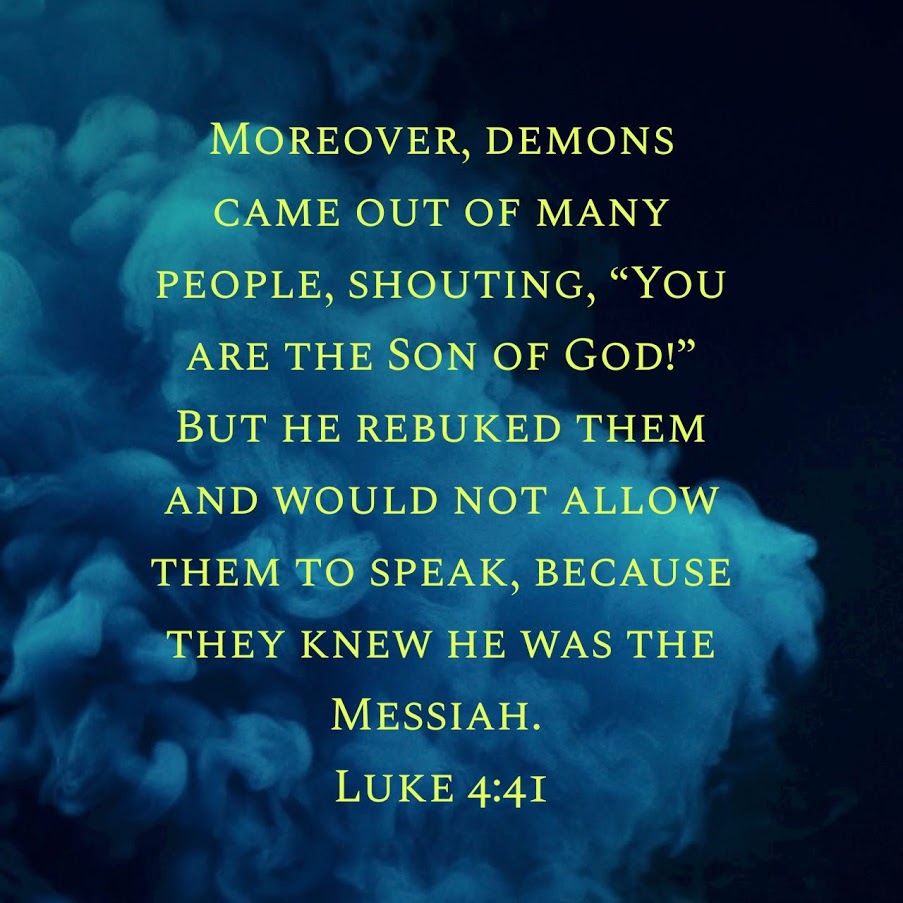
Here’s the most exciting part of this passage. Many people who were brought to Jesus were demon-possessed. These demons knew who Jesus was. They came out of people after Jesus touched them, shouting,

Wait a minute. How do these demons know who Jesus is?

These demons are showing their angelic root. The devil and his crew are fallen angels. These evil spirits knew precisely who Jesus was. But Jesus did not want them to bear witness to who He was, so Jesus silenced them.

As I said earlier, Jesus didn’t want people to see Him merely as a healer who could cast out evil spirits. He wanted people to learn from Him by listening to His words and following Him. This way, they would understand who He really was, the Son of God who was sent to save the world from sin.

Jesus Heals Peter’s mother-in-law

We’ve all had a fever at one time or another in our lives. Sometimes, the temperature is what we call “low grade” and leaves us tired and uncomfortable. Other times, fevers can be high, causing chills, dizziness, and even hallucinations.

I can recall a time 25 years ago when my daughter had a fever of over 104. It caused her to feel weak and chilled, and she was talking nonsense as if she didn’t even know where she was.

One thing I do recall about having a high fever is that even after it broke, I still felt pretty weak and exhausted. Sometimes, it would take several days before I returned to some sort of normalcy.

My fever story brings us to one of Jesus’ early miracles:

In this passage, we learn three important things.

First, Simon Peter was married. The man has a mother-in-law! You have to remember the disciples left everything to follow Jesus. Since we know Peter was married, we can presume he also put his personal life on hold while traveling with Jesus for the next three years.

Second, Simon’s mother-in-law didn’t just suddenly get well because her fever broke. This healing was a miracle. This woman not only had the temperature leave her body, but she also had the strength to get up, make food, and feed Jesus and His followers.

Third, Jesus was not a prophet or God who did miracles that would attract attention to Himself. (The miracle of water into wine was not done to draw attention, but it did). He was the God and healer of the ordinary person, healing this sick woman of a simple fever. One can only imagine all the healings Jesus did during His ministry that are not recorded. Jesus must have cured people of colds, fevers, sinus problems, warts, earaches, and ingrown toenails.

It’s reasonable to believe that He did many mass healings for the ordinary “man” and common ailments because He came for everyone.

The Baptism of Jesus

Not many of us remember our baptisms unless we were baptized as adults. I actually have a photo (see above) of my mother holding me in her arms at our home in Chicago on my baptism day. That would have been sometime in early July of 1951.

As Christians, we believe that The Holy Spirit enters us at Baptism and lives with us throughout our lives as our guide and helper. He helps us to curb our sins and can be a disciplinarian.

It’s interesting to think about the fact that Jesus, the Son of God, was baptized:

One day, Jesus came from Nazareth in Galilee, and John baptized him in the Jordan River. As Jesus came up out of the water, he saw the heavens splitting apart and the Holy Spirit descending on him like a dove. And a voice from heaven said,

The Spirit then compelled Jesus to go into the wilderness, where he was tempted by Satan for forty days. He was out among the wild animals, and angels took care of him.’

Jesus was baptized by (His cousin) John the Baptist for a purpose. It was the beginning of His formal ministry. The triune God was there.

God the Father was there when the heavens opened. Not only did Jesus hear the words spoken from heaven by the Father, but so did John the Baptist (John 1:32).

God, the Holy Spirit, was there too.

And, of course, Jesus was there, in person.

Jesus’ Baptism was a sending. His Father stated He loved and trusted Him enough to take our place. Redemption began here at Christ’s Baptism and was completed at Calvary.

Jesus was now equipped for His ministry and was immediately sent into the wilderness by the Holy Spirit. Here, Jesus did battle with the devil for 40 days. It was a non-stop attack in which Jesus, God, and man survived and were victorious.

Several years later, Jesus would once again be the victor. By dying on the cross and rising from the dead three days later, He overcame sin and death for us.

It’s important to note that without Baptism, and without faith, and knowing who Jesus is, there is no victory over death for humankind. That’s why in Matthew 28:18b-20, Jesus says:

Holy Spirt vs. evil spirits

Many years ago, I was interviewed by a church in Florida for the position of Director of Christian Education. I dutifully visited the church and spoke with the pastor, board members, and some congregation members there.

Several days after my interview, the church issued me a call. For those unfamiliar with a “call,” it is when a church contacts a rostered church worker. The church informs the worker that they have been led by God to ask them to bring and utilize their gifts as an ordained or non-ordained minister of religion to their church.

It was then my job to dutifully consider the call through prayer and the guidance of the Holy Spirit. About a week after receiving the formal invitation to serve, I called the pastor (this one is the phone type). I asked if I could meet with him and several board members one more time before finalizing my decision. A meeting was set for later that week.

After arriving at the church, I sat in the pastor’s office with several board members, as mentioned above. I had several questions about the church and my duties written down that I wanted to discuss.

The meeting was casual, and we all just sat in chairs in the middle of the room. The strangest thing occurred as I began to ask my questions, and the board members were answering me. At first, I thought my eyes were blurry, as a fog or mist surrounded me as I spoke with the board members. As I looked at them through the haze, I saw looks of disdain and had the feeling they all felt that this meeting was a waste of time and I shouldn’t have asked to meet with them.

Suddenly, I no longer heard a word the group was saying to me. Their lips were moving, but there was no sound. But I did hear a voice. It was not a whisper; it was actually pretty loud. The voice simply said, “You need to leave; this is not where I want you to be.”

I listened to the voice that I believed was the Holy Spirit speaking to me, cutting the discussion short, and left. The next day, I sent a letter to the church formally declining the ‘call.’

In the Gospel of Luke, he tells the story of a man possessed by an evil spirit.

Then Jesus went to Capernaum, a town in Galilee, and taught there in the synagogue every Sabbath day. There, too, the people were amazed at his teaching, for he spoke with authority.

Once, when he was in the synagogue, a man possessed by a demon—an evil spirit—cried out, shouting, “Go away! Why are you interfering with us, Jesus of Nazareth? Have you come to destroy us? I know who you are—the Holy One of God!”

At that, the demon threw the man to the floor as the crowd watched; then, it came out of him without hurting him further.

Amazed, the people exclaimed, “What authority and power this man’s words possess! Even evil spirits obey him, and they flee at his command!” The news about Jesus spread through every village in the entire region.”

The verses above say that the man was possessed by an evil spirit. Although it could have been more than one, as the demon/evil spirit said,

Why was Jesus interfering with the evil spirits? Because they were telling everyone who was within earshot that He, Jesus, was the Holy One of God!”

The evil spirit recognizes that Jesus is his enemy, and he knows that one day, Jesus will be his demise.

The two most remarkable parts of these passages are, first, that Jesus has the power to command the spirit to leave the man just by saying the words, “Be quiet, get out of the man.” The spirit had no choice but to flee the man because God had told him to.

Just like God spoke words to bring about creation, Jesus said words to chastise and have the spirit leave the man.

The second noteworthy part of the passage is this;

Jesus had taken over. The evil spirit was no longer in control. Jesus was not about to let the man be injured or hurt by this spirit any further. The demon threw the man to the floor, but you might say Jesus caught him. The evil spirit came out of the man without hurting him any further. Jesus protected the man from the moment He stated, “Get out of the man.”

As Christians, we believe the Holy Spirit lives within us as a guide and helper throughout our lives. In my case, the Holy Spirit spoke to me in a very unusual way. He clouded things around me and spoke forcefully, saying, “Get out!”

Jesus was and is a man/God all about serving. And on that day in the synagogue, Jesus served that man by healing and ridding him of an evil spirit.

I believe that the Holy Spirit lives within us. I also believe that there are evil spirits in this world today, too.

As the writer says in 1 Peter 5:8: