Tinsel on the Tree

Advent stories and messages from around the world

“Tinsel on the Tree”

December 17, 2021

Matthew 2:13-18; Hosea 11:1; Jeremiah 31:15

When I was a kid, one of the musts for decorating your tree was tinsel.

It came in rectangular boxes with a couple thousand silver metal strands to hang on your tree.

Several stories or legends concerning tinsel being used on the Christmas tree exist.

One of the stories actually has a Christian background. Mary and the baby Jesus supposedly narrowly escape the Roman soldiers sent by Herod to kill baby Jesus. So, Mary hid in a cave, trying to avoid their capture and the inevitable death of her newborn son. After Mary and the baby entered the cave, spiders sealed the entrance with webbing. When the soldiers came by and noticed that the opening to the cave had undisturbed spider webs at its entrance, they simply passed it by.

Since then, tinsel has been put on trees to commemorate what the spiders did that day.

Another legend describes a family whose tree had been covered with spider webs after being brought into their home. But Father Christmas showed up that night while the family was sleeping and changed the spider webs into sparkling silver strands.

(Excerpts taken from bugoftheweek.com)

Interestingly enough, the tinsel my family put on the trees when I was a kid was banned in 1971, as it contained high amounts of lead and was toxic.

*****************************************************

The story of Mary and Jesus escaping the Romans is actually, partially true.

This is what happened after the wise men left the home of Joseph, Mary, and Jesus.

“When they had gone, an angel of the Lord appeared to Joseph in a dream. “Get up,” he said, “take the child and his mother and escape to Egypt. Stay there until I tell you, for Herod is going to search for the child to kill him.”

So, he got up, took the child and his mother during the night, and left for Egypt, where he stayed until the death of Herod. And so was fulfilled what the Lord had said through the prophet: “Out of Egypt I called my son.” Hosea 11:1

When Herod realized that he had been outwitted by the Magi, he was furious, and he gave orders to kill all the boys in Bethlehem and its vicinity who were two years old and under, in accordance with the time he had learned from the Magi. Then what was said through the prophet Jeremiah was fulfilled:

“A voice is heard in Ramah,

weeping and great mourning,

Rachel weeping for her children

and refusing to be comforted,

because they are no more.” Jeremiah 31:15

As you can see from the reading, Mary and the baby Jesus did escape the clutches of the Roman soldiers. This happened after an angel appeared to Joseph in a dream and told him to take his family and leave for Egypt.

Unfortunately, their leaving did not preclude the horrible actions that a misguided Herod ordered in an attempt to stop the child from someday gaining power. All male children under the age of two in Bethlehem and the surrounding areas were ordered to be killed.

Some theologians believe that thousands of children were slaughtered after Herod’s orders were given. But that number would be much too large as Bethlehem was a small hamlet of about 300 people. Today many religious leaders believe it was more like 30-40 male children were killed.

The numbers aren’t important; many families lost a child because of the tyranny of Herod.

Yes, Jesus and His family did escape capture and certain death. However, they did not return to their homeland until after the death of Herod.

God had a plan, and part of it was for Jesus’ family to escape, so He might live and return to begin His ministry at a later date and fulfill God’s promise.

Dear Lord, it’s a horrible story. Children were put to death because Herod believed Your Son was a threat to Him. We know that Your Son is not a threat but a blessing. He is the promised Messiah, the chosen one, who came to earth to give His life to save ours. Thank you for sending Jesus to rescue us. Amen.

“Bûche de Noël” – Yule Log

Advent stories and messages from around the world

“Bûche de Noël” – Yule Log

December 16, 2021

Luke 2:4-7; Matthew 6:25-34

Have you ever had a “Bûche de Noël”? It’s a delicious French pastry usually made during the Christmas season. It is made with sponge cake, and whipped cream rolled into a log. It is then decorated with chocolate and made to look like a Yule Log.

What? Did I just hear someone say, “What’s a Yule Log?” I’m so glad you asked. 😊

The history of the Yule Log goes back centuries. It was originally a Nordic tradition. Yule is actually the name of the Winter Solstice festivals held in Scandinavia and northern Europe.

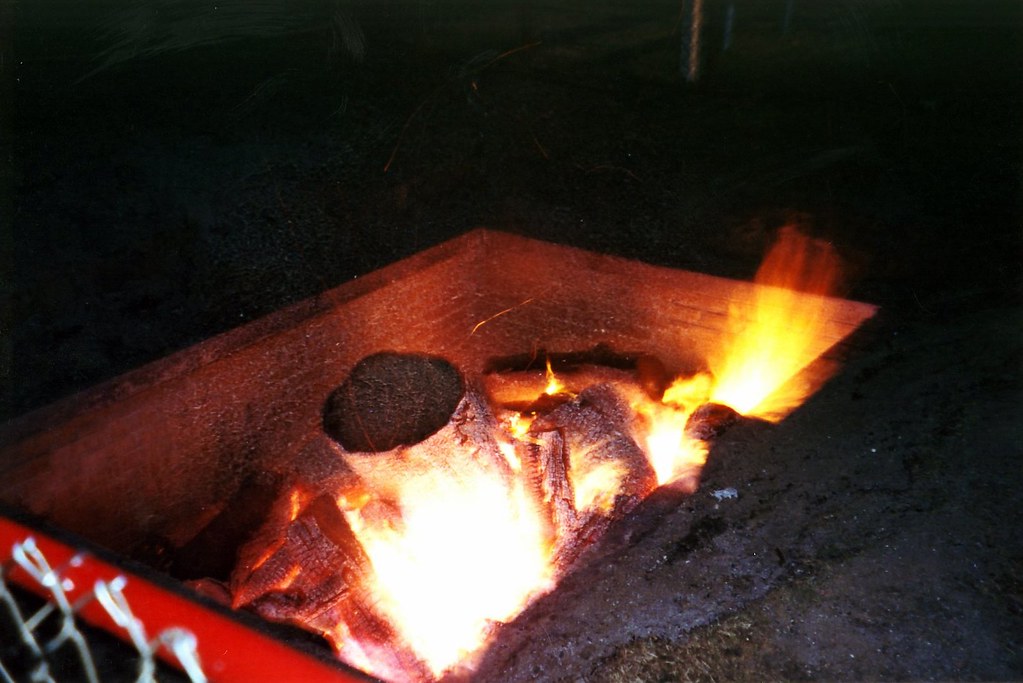
Many people don’t know that the Yule Log was originally a complete tree. The tree was brought into the home. The large end was placed in the hearth while the rest of the tree lay in the room. The tree was slowly fed into the fire through the twelve days of Christmas.

In France, it’s traditional for the entire family to cut the log down, and a bit of it is burnt each night.

In some regions of England, some families have large bunches of Ash twigs instead of a log. This is done based on the Legend that Mary, Joseph, and the baby Jesus were very cold when the shepherds found them on that first Christmas night. So, the shepherds got some bunches of twigs and started a fire to keep them warm.

Finally, in Ireland, some families use a large candle instead of a log and light it only on New Year’s Eve and the 12 nights of Christmas.

(Excerpts taken from whyChristmas.com)

I guess my favorite Yule Log is the one I get to eat. Let’s face it, it’s chocolate cake, with whipped cream and then more chocolate on top of that. How can one resist?

*******************************************************

Did you pick up on the tradition in some regions of England where people burn twigs? The custom says that the shepherds burned twigs to keep the Holy family warm that night.

There’s been controversy as to what month Jesus was actually born for as long as I can remember. For argument, let’s say Jesus was born in Jerusalem in December. The average temperature there is 56 during the day and 47 at night.

With that in mind, read the passage below from Luke.

“So, Joseph also went up from Galilee, from the city of Nazareth to Judea, to the city of David which is called Bethlehem, because he was of the house and family of David, in order to register with Mary, who was betrothed to him and was with child. While they were there [in Bethlehem], the time came for her to give birth, and she gave birth to her Son, her Firstborn; and she wrapped Him in [This was customary among the Jews and quite comfortable and protective for the baby. Wrapping the baby in strips of cloth was intended to strengthen the back and bones for good growth. Swaddling] cloths and laid Him in a, I.e., feeding trough for animals. manger, because there was no [private] room for them in the inn.”   Luke 2:4-7 AMP

So there’s no room for them at the inn, and Mary wraps the baby Jesus in the traditional swaddling cloth. Then she lays the baby in a feeding trough. The manger/feeding trough lends to the belief that Mary gave birth to Jesus in some sort of a stable.

We actually know very little about Jesus’s birth, just a few paragraphs in Luke and even less in the other Gospels. Would Joseph have started a fire to keep them warm?

In Matthew 6, Jesus tells us not to worry about our basic needs; those will be taken care of; instead, we should seek to be righteous in the sight of God. One must believe that Mary, Joseph, and the baby Jesus’ needs were met that night. Perhaps it was a fire or warm blankets they had or were given to them by the shepherds.

Remember, God provides for our needs as well:

“Therefore, I tell you, do not worry about your life, what you will eat or drink, or about your body, what you will wear. Is not life more than food, and the body more than clothes? Look at the birds of the air; they do not sow or reap or store away in barns, and yet your heavenly Father feeds them. Are you not much more valuable than they? Can any one of you, by worrying, add a single hour to your life6:27 Or single cubit to your height?

 “And why do you worry about clothes? See how the flowers of the field grow. They do not labor or spin. Yet, I tell you that not even Solomon in all his splendor was dressed like one of these. If that is how God clothes the grass of the field, which is here today and tomorrow is thrown into the fire, will he not much more clothe you—you of little faith? So do not worry, saying, ‘What shall we eat?’ or ‘What shall we drink?’ or ‘What shall we wear?’ For the pagans run after all these things, and your heavenly Father knows that you need them. But seek first his kingdom and his righteousness, and all these things will be given to you as well. Therefore, do not worry about tomorrow, for tomorrow will worry about itself. Each day has enough trouble of its own.” Matthew 6:25-34

Yes, we will have troubles in our lives. For example, Joseph and Mary were probably distraught on that night because they did not have a proper place for their child to come into the world. But they had faith that God would provide, and He did.

God will always provide for our most basic needs. So put your problems and worries into His hands, and He will furnish an answer.

Hopefully, this year, you’ll be celebrating Christmas in a warm and cozy home and eating large meals (maybe even a Buche de Noel). As you exchange gifts with family and friends, remember what and who you are celebrating. How one star-filled chilly evening over 2000 years ago, the Savior of the world was born in a stable to die for you and me. Amen

Dear Jesus. We don’t know the exact circumstance under which you were born. What we do know is that you came into this world to save us. You had one task. To sacrifice yourself for us so that we may have the right to eternal life with you. Amen.

Why are those Stockings hung on the Mantle?

Advent stories and messages from around the world

Why are those stockings hung on the mantle?

December 15th, 2021

Matthew 6:19-21

There are many stories about how hanging stockings on the mantel at Christmas got started.

My favorite story involves the original St. Nicholas, who was known to help others. There was a needy family with three sisters. One night they were drying their stocking on the mantel of the fireplace. Saint Nicholas took it upon himself to prepare 3 small bags of gold coins for the sisters. Supposedly, he dropped the bags of gold coins down the chimney, and they landed in the girl’s stockings.

(I have also read that this money was given so the family wouldn’t have to sell their daughters as indentured servants or even prostitution.)

For some reason, Germany seems to be involved in many modern-day Christmas traditions 😊.  For example, traditionally, the children in Germany hung an empty sock on the mantel on Saint Nicholas Day (December 6th). In this way, Saint Nicholas, Father Christmas, or Santa Claus would fill them with toys and candy.

***************************************************

These Christmas stories of receiving gifts from St. Nicholas, Father Christmas, Santa Claus, and the like are fun, endearing, and joyful.

But let’s remember something. Any gifts we receive in a stocking, under the tree, or in our driveway with a big red bow on top are gifts that will only last temporarily.

 “Do not lay up for yourselves treasures on earth, where moth and rust destroy and where thieves break in and steal, but lay up for yourselves treasures in heaven, where neither moth nor rust destroys and where thieves do not break in and steal. For where your treasure is, there your heart will be also.  Matthew 6:19-21

Jesus tells us that earthly treasures are temporary, or as the famous line says, “You can’t take it with you!” If our life is all about accumulating “stuff,” then that’s what our heart is all about. Our hearts can be filled with greed for more and more stuff, never being satisfied with what we have.

But, God gave us a gift that will never rust, never get old, and has no end date. He gave us forgiveness of sins through the death and resurrection of His Son Jesus. And this was and is a free gift, not because we deserved it or loved God, but because God loved us.

By God’s Grace and through our Faith in Jesus Christ, we are saved and now are blessed with the promise of Eternal life. No one can take that away from us. It’s set in stone. As a Christian, I am saved, and so are you.

Enjoy your Christmas. Hang the stockings, put up the tree, and exchange presents. Don’t forget to share the story of Jesus and the great gift He gave us with your friends and family. Amen.

Dear Lord, thank you. You’ve taught us to be giving and caring people. We do this throughout the year, with a particular emphasis at Christmas time. This year as we exchange gifts and come together with family, help us to remember your perfect gift to us, Jesus. Amen

Why are there Lights on the Tree?

Advent stories and messages from around the world

“Why are there Lights on the tree?”

December 14, 2021

John 9:4-5; 8:12; 3:19; 1:4

The story of the first lighted Christmas tree goes back to the 16th century. German tradition says that Protestant reformer, Martin Luther, was the first to add lit candles to a tree.

The story goes that Martin Luther was walking home through the woods one night, and he was inspired by the sight of stars twinkling amongst evergreens in the woods. So, Luther wanted to recreate his experience from the woods in his home for his family. So, he put up an evergreen in his home and put lit candles on it. (Please! Don’t ever do that; it’s a fire hazard).

We have to move forward three centuries to see the first Christmas tree with lights. So it’s only appropriate that Thomas Edison’s name is attached to this story. In 1884, Edward Hibberd Johnson, a friend and investor of Edison’s had an idea.

He set up a Christmas tree by the street-side window of his parlor. (Sitting room) Johnson then proceeded to Edison’s lab, where he hand-wired 80 red, white, and blue lights, which he strung around the tree, powered by a generator.

Today, we enjoy the beauty of all types of Christmas tree lights, on Evergreens, Spruce, artificial, and many even come pre-lit.

Here’s a quick tidbit about Christmas tree lights. The Hallmark channel has several of their Christmas movies dealing with balls of lights all tangled together every year. About 20 years ago, my wife Kathy found a tip for when you take down your Christmas lights each year. Take several empty paper towel tubes and wrap your lights around them as you take down your tree. Then, next year, all you have to do is walk around your tree, slowly unrolling the lights from the roll.

*************************************************

If the Christmas tree and its shape are a reminder of our Triune God, The Father, the Son, and the Holy Spirit, then Christmas lights should remind us that Jesus is the light of the world.

The theme of Jesus being the light in our dark world is repeated throughout the Gospel of John.

“As long as it is day, we must do the works of him who sent me. Night is coming when no one can work. While I am in the world, I am the light of the world.” John 9:4-5

When Jesus spoke again to the people, he said, “I am the light of the world. Whoever follows me will never walk in darkness but will have the light of life.” John 8:12

This is the verdict: Light has come into the world, but people loved darkness instead of light because their deeds were evil.

John 3:19

In him was life, and that life was the light of all mankind. John 1:4

How is Jesus the light of the world? Through you and me! We are His light in this world. As we read and share the scriptures with others, we are Jesus’ light to them. When we follow Christ’s life as a model for ourselves, by being a servant to all, showing kindness and love to others, we are His light in this world.

Through you and me, Jesus brings His light to others, so they may come out of the darkness of this world and be free to receive God’s Grace. So they may have the faith that you and I do in the Gospel of Jesus Christ.

 Dear Jesus. We know and believe that you are the light in this world. Help us spread that light throughout the world as we share your words and actions with others. Bring them to know you as our Lord and Savior who died so that we may live eternally. Amen.

A Short History of the Christmas Tree

Advent stories and messages from around the world

“A short history of the Christmas Tree”

December 13, 2021

Matthew 28:19; 2 Corinthians 13:14; 1 Peter 1:1-2

The Christmas tree tradition as we know it today began in the 16th century. But, the use of evergreens for decorations and worship goes back much further.

The Druids, who lived in what is now England and France from the 3rd century B.C. till the 2nd century A.D., decorated their temples with boughs made of evergreens as a symbol of everlasting life.

The Vikings worshiped evergreens, as they believed it to be a unique plant from the sun god, Balder.

Then there is the story of St. Boniface. In the 8th century, he traveled through southern Germany when he came upon some pagans. These pagans weren’t just unbelievers, but they had a horrible yearly ritual. Each year they would sacrifice a person, usually a child, to Thor, the god of thunder. (Marvel studios must hate this story), at the base of a tree known as the Thunder Oak. St. Boniface arrived on the scene just as they were about to sacrifice a child with a hammer (as you know, Thor swings a hammer). Boniface stopped the people and swung an ax to fell the tree. But, just as he did so, a great wind came up and uprooted the tree, which broke into four pieces.

Supposedly the wood from the Thunder Oak was used to build a chapel. Then next to the fallen oak, an evergreen sprouted up, and Boniface called it the tree of the Christ child.

I have also read many years ago that Boniface started the tradition of bringing an evergreen indoors. People would hang it upside down from the ceiling (I once read this was to keep rats out of it), and people would gather around it and share gifts.

Although the trees we see today point straight up to heaven, the trees that were hung upside down in Boniface’s time were sometimes called the trinity tree. Each corner of the tree represented one of the Blessed Trinity, God the Father, God the Son, and God the Holy Spirit.

As I said earlier, our modern-day Christmas tree dates back to the 16th century in Germany. Christians brought trees into their homes and decorated them. Martin Luther is credited with adding lighting to the modern-day Christmas tree.

But that is a story I’ll save for tomorrow 😊

********************

The Bible talks about our Triune God many times throughout it. Other times it is inferred that all three persons, God the Father, God the Son, and God the Holy Spirit, are present.

Here are just a few references to our Triune God.”

“Therefore, go and make disciples of all nations, baptizing them in the name of the Father and of the Son and of the Holy Spirit” Matthew 28:19

“May the grace of the Lord Jesus Christ, and the love of God, and the fellowship of the Holy Spirit be with you all.” 2 Corinthians 13:14

“Peter, an apostle of Jesus Christ, To God’s elect, exiles scattered throughout the provinces of Pontus, Galatia, Cappadocia, Asia, and Bithynia, who have been chosen according to the foreknowledge of God the Father, through the sanctifying work of the Spirit, to be obedient to Jesus Christ and sprinkled with his blood: Grace and peace be yours in abundance.” 1 Peter 1:1-2

Three Distinct persons in our one God.

God the Father, the Creator of all things, instituted the Law we call the Ten Commandments.

God the Son, Jesus Christ. Sent to earth where He accomplished many things, like teaching, healing, feeding many, and showing us how to put others first by serving them. Yet, Christ’s ultimate goal was to die on a cross for our sins. So that we may have eternal life.

Last but certainly not least, God the Holy Spirit. He came to live as promised by Jesus, within the Apostles at Pentecost. He now lives within us from the moment we are baptized. The Holy Spirit guides us on the path set before us before we were born. He also disciplines up and encourages us to get back on that path when we stray.

The next time you look at your Christmas tree, look at it as a triangle, with each corner representing one part of the triune God. Don’t be afraid to make the sign of the cross and say; In the name of God the Father, God the Son, and God the Holy Spirit. Take time today to praise our Triune God, and thank Him for the many blessings we receive each day.

Thank you, Lord, for being our mighty God, who is three persons in one. You are our Creator, our Savior, and our guide throughout life. Thank you for all you do for us each day and the many blessings you supply. Amen.

Preparation is important for good results

Advent stories and messages from around the world

Third Sunday of Advent – December 12, 2021

“Preparation is important for a good result.”

Isaiah 40:3; Luke 7:18-28

One of my favorite things to do is to bake. Of course, I bake cookies, pies, cakes, but my favorite thing to bake is cheesecakes. And, my favorite cheesecake recipe is “Praline Cheesecake.”

I’ve learned over the years that you need to prepare when making a cheesecake. Unlike a box cake, where you add eggs, butter and pop it in the oven, cheesecake takes a bit more prep time.

For my Praline Cheesecake, I need three 8 oz. packages of cream cheese. The cream cheese to be soft so I can mix it with other ingredients. So, it’s essential that I take the cream cheese out of the refrigerator at least an hour before I begin putting the ingredients together.

The other thing that needs to be done is to make the crust before making the cake ingredients. This involves mixing a cup of graham cracker crumbs and melted together. Then that mixture is pressed into a springform pan and baked at 325 for eight minutes. After the crust is done, it needs to cool before adding the cream cheese mixture.

I’m a bit of a stickler when it comes to ingredients, so I have all of my ingredients measured and lined up beforehand. One other bit of prep work is taking the three eggs out of the fridge used in the cheesecake mixture for at least 30 minutes before mixing them with the now softened cream cheese.

It sounds pretty involved, doesn’t it? And that’s not the whole recipe. But, you can only have a well-made and delicious cheesecake if you plan and prepare before the actual mixing and baking.

*******************************************************

God’s pretty good at advance preparations too. So he promised someone would come to pave and prepare the way for the coming Savior.

A voice of one calling:

“In the wilderness prepare

the way for the Lord40:3 Or A voice of one calling in the wilderness: / “Prepare the way for the Lord;

make straight in the desert

a highway for our God. Isaiah 40:3

God sent John the Baptist (Jesus’ cousin, the son of Elizabeth) to pave the way for Jesus’ ministry. Jesus even verified that John the Baptist was indeed the person spoken of in the Old Testament.

“John’s disciples told him about all these things. Calling two of them, he sent them to the Lord to ask, “Are you the one who is to come, or should we expect someone else?”

When the men came to Jesus, they said, “John the Baptist sent us to you to ask, ‘Are you the one who is to come, or should we expect someone else?’ ”

At that very time, Jesus cured many who had diseases, sicknesses, and evil spirits and gave sight to many who were blind. So, he replied to the messengers, “Go back and report to John what you have seen and heard: The blind receive sight, the lame walk, those who have leprosy (7:22 The Greek word traditionally translated leprosy was used for various diseases affecting the skin.)are cleansed, the deaf hear, the dead are raised, and the good news is proclaimed to the poor. Blessed is anyone who does not stumble on account of me.”

After John’s messengers left, Jesus began to speak to the crowd about John: “What did you go out into the wilderness to see? A reed swayed by the wind? If not, what did you go out to see? A man dressed in fine clothes? No, those who wear expensive clothes and indulge in luxury are in palaces.

But what did you go out to see? A prophet? Yes, I tell you, and more than a prophet. This is the one about whom it is written:

“ ’I will send my messenger ahead of you,

who will prepare your way before you.’ 7:27 Mal. 3:1

 I tell you, among those born of women, there is no one greater than John; yet the one who is least in the kingdom of God is greater than he.” Luke 7:18

As I mentioned in an earlier devotion, John never claimed to be the Savior. Instead, he said someone was coming that was far greater than himself. John told the people that he was not worthy to tie (Jesus’) shoes and that he John baptized with water, but the one coming (Jesus) would baptize with the Holy Spirit).

Yes, there was and is no question John the Baptist’s job was to prepare the way for Jesus’ ministry. This preparation made way for the Son of God to fulfill His destiny as the Savior of the world.

Prepare yourself each day for what may come your way by immersing yourself in God’s word and prayer. Let Christ’s love shine in you, so others may know who He is. Amen.

Dear Lord. You sent John the Baptist to prepare for the coming of your Son Jesus. Help me to prepare each day for the world we face. Help me to be a beacon of light in the wilderness for you, so others may come to know you as I do.

Amen.

Shoes by the fire on Christmas

Advent stories and messages from around the world

Shoes by the fire on Christmas

December 10, 2021

John 13:3-17

When I was young, I lived in Chicago. Like many cities and states up north, we had some freezing and icy weather. Snow, wind, sleet, and sometimes freezing rain. I can remember coming in after slogging through snow and sleet, and my body would be cold, and my shoes would be wet.

Back then, we had the old-style radiators in our home to heat the house.

Our family would put our shoes near or under the radiator to dry them out. But those who had a fireplace sometimes put their shoes near the fireplace to dry their shoes and wet socks.

The children of France have a unique tradition at Christmas. They leave out their shoes in front of the fireplace on Christmas Eve, hoping Père Nöel will fill them to the brim with little presents, sweets, fruit, nuts, and anything else that will fit in there.

I guess the larger the shoe, the better. I’d probably make out pretty good since I have size 12 shoes. 😊

*************************************************************

The first thing that comes to mind when I think of shoes is feet. And when I think of feet, I think of Jesus washing the disciple’s feet at the last supper.

“Jesus knew that the Father had put all things under his power and that he had come from God and was returning to God; so, he got up from the meal, took off his outer clothing, and wrapped a towel around his waist. After that, he poured water into a basin and began to wash his disciples’ feet, drying them with the towel that was wrapped around him.

He came to Simon Peter, who said to him, “Lord, are you going to wash my feet?”

Jesus replied, “You do not realize now what I am doing, but later you will understand.”

“No,” said Peter, “you shall never wash my feet.”

Jesus answered, “Unless I wash you, you have no part with me.”

“Then, Lord,” Simon Peter replied, “not just my feet but my hands and my head as well!”

Jesus answered, “Those who have had a bath need only to wash their feet; their whole body is clean. And you are clean, though not every one of you.” For he knew who was going to betray him, and that was why he said not every one was clean.

When he had finished washing their feet, he put on his clothes and returned to his place. “Do you understand what I have done for you?” he asked them. “You call me ‘Teacher’ and ‘Lord,’ and rightly so, for that is what I am. Now that I, your Lord and Teacher, have washed your feet, you also should wash one another’s feet. I have set you an example that you should do as I have done for you. Very truly, I tell you, no servant is greater than his master, nor is a messenger greater than the one who sent him. Now that you know these things, you will be blessed if you do them.” John 13: 3-17

What many people don’t know about Jesus washing His disciple’s feet was that He was keeping with tradition. It was traditional for the owner of a house or one of his servants to wash the feet of their guests as they entered the home. Why? This was not a ceremonial washing; it was a necessity for cleanliness.

We need to remember that the streets in a town like Jerusalem or any community of that time were dirt. But it’s more than that. Most people walked either barefoot or had thin sandals. The streets were filled not only with people. There were horses, donkeys, goats, and sheep, walking the streets with their owners and “doing their business,” whenever and wherever they wanted.

So, when someone came to your house, their feet weren’t just dusty dirty; they were probably “Yucky,” dirty.

There is no mention that the master of this household, where Jesus had the Passover meal with his disciples, had cleaned their feet as they entered his home. But, leave it to Jesus to take someone else’s oversight or neglect and turn it into a teaching moment.

Here was the Son of God, on His knees cleaning his disciples’ feet. Yes, their feet were probably filthy. But Jesus’ actions were two-fold. One, He washed their feet of dirt and “debris.” Two, He gave His disciples an example of what servanthood looked like. Serving others is not beneath anyone.

When we help others with food, money, housing, or paying a bill, we are being a servant of Christ, just like He was and is to all of mankind.

Jesus served us by coming to earth and allowed Himself to be arrested, beaten, and hung on a cross.

Why? Because He loves you and me. His words echo throughout history,

“Greater love has no one than this: to lay down one’s life for one’s friends.”

You and I, as Christians, are friends of Jesus. Jesus gave His life for us. Jesus’ shoes are pretty big ones to fill. So, the question is, “What are you willing to do to serve your Lord and Savior Jesus Christ?”

Dear Jesus. You serve us each and every day. You listen to our prayers, and you answer them. We are sick in body and sometimes spirit, and you hold us close as we are healed. Help us be a servant like you, giving of ourselves for others.

Amen

A Donald Duck Christmas

Advent stories and messages from around the world

A Donald Duck Christmas

December 10, 2021

Luke 22:17-20

As I researched many different Christmas traditions from around the world, I would have to say that I found Sweden’s Christmas Eve tradition the strangest.

Every December 24 since 1958, at 3 p.m. in the afternoon, families in Sweden sit down in front of their televisions and watch,

Kalle Anka och Hans vanner onskar God Jul, or “Donald Duck and his friends wish you a Merry Christmas.”

Most of the show is a repeat of the 1958 Walt Disney Present Christmas special, “From all of Us to All of You.” The show airs without commercial interruption (Yeah, try that in the States!).

It’s pretty much the same show every year with clips from old Disney movies, and surprisingly not very much of it has to do with Christmas. (Disney has one Caveat, Swedish television must show a trailer of the most Disney film.)

Here’s the most fascinating part of this tradition. Almost half of all the households in Sweden watch this “Donald Duck” special every year!

(Excerpts taken from Culture Boxes Nordic Quack, by Jeremy Stahl, 2009, December 22)

*********************************************************

50% of the families in Sweden stop what they’re doing on Christmas Eve and watch a Disney Donald Duck Christmas special. Wouldn’t it be amazing if 50% of the people in the United States stopped for one hour every Sunday and went to church to worship God?

In my 25 years in full-time ministry, I was always amazed at how many unfamiliar faces I saw at church on Christmas Eve. One of my pastors used to call it a case of C.E.O.’s. These are people who only come to church only on Christmas and Easter.

I laughed when I heard the term C.E.O. used to reference people’s church attendance. But, actually, it’s pretty sad, isn’t it?

As Jesus reclined in the upper room with His disciples, He instituted what we refer to as The Last or The Lord’s Supper.

“After taking the cup, he gave thanks and said, “Take this and divide it among you. For, I tell you, I will not drink again from the fruit of the vine until the kingdom of God comes.”

And he took bread, gave thanks and broke it, and gave it to them, saying, “This is my body given for you; do this in remembrance of me.”

In the same way, after the supper, he took the cup, saying, “This cup is the new covenant in my blood, which is poured out for you.”

Luke 22:17-20

Jesus set a precedent when He said, “Do this in remembrance of me.” I notice the church has often added a word to that sentence, “often.”

Yes, we should remember our Lord Jesus often. We should think about and worship Him in everything we do, whether playing or working. We worship Jesus when we receive the Sacrament of Holy Communion, His Body, and Blood which is really present in the bread and wine.

It’s not something to be taken lightly because Jesus Himself, the Son of God, told His disciples (That’s you and me!) to “Do this in memory of Me.”

Don’t be a C.E.O. and (get ready, here it comes) don’t “Duck” any opportunity you have to worship Jesus, with all of your heart, your soul, and mind.

Dear Jesus. So many times, we find excuses to not take time to worship You by partaking of the Sacrament you instituted at the Last Supper. Help us to do better and to take every opportunity we can to worship you with all of our hearts. Amen

The story behind the Carol, Silent Night

Advent stories and messages from around the world

The story behind the Carol, Silent Night

December 9, 2021

Psalm 33:1; Isaiah 12:5; Psalm 96:1; Exodus 15:1

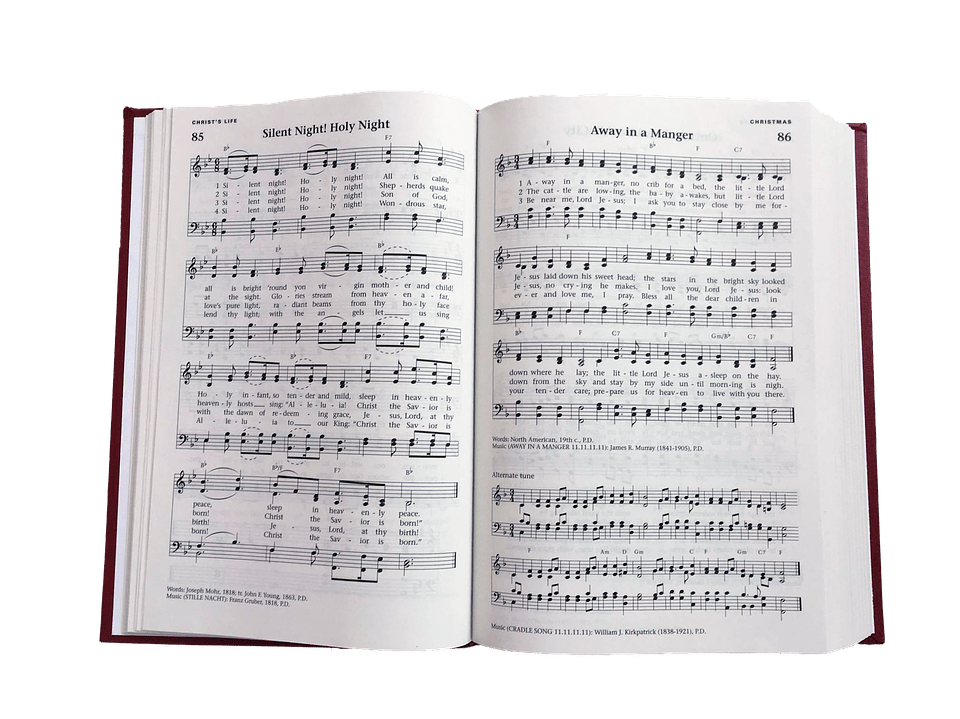
The Story of the beloved Christmas Carol, Silent Night, varies, depending on who’s telling it. Suffice it to say it was written in Germany. It is just as popular today as when first sung at St. Nicholas church in Oberndorf, Germany, over 200 years ago.

(The long and the short of it)

In the original German, Silent Night—or Stille Nacht —was created because Josef Mohr needed a carol for worship. On Christmas Eve of 1818, Mohr visited Franz Xaver Gruber with a poem he had written in 1816. Gruber quickly arranged the song to be played on a guitar with a choir because the church organ was broken. That evening at Midnight Mass, Gruber strapped on his guitar and led the congregation at St. Nicholas in the first rendition of Silent Night. (The Gospel Coalition.org)

*************************************************************************

Why do we sing in church? Why do we raise our voices in song to the Lord?

Let me share with you several verses from the Bible that come right out and tell us to “Sing to the Lord!”

Sing joyfully to the Lord, you righteous; it is fitting for the upright to praise him. Psalm 33:1

Sing to the Lord, for he has done glorious things; let this be known to all the world. Isaiah 12:5

Sing to the Lord a new song; sing to the Lord, all the earth. Psalm 96:1

Then Moses and the Israelites sang this song to the Lord: “I will sing to the Lord, for he is highly exalted. Both horse and driver he has hurled into the sea. Exodus 15:1

King David tells us to sing to the Lord, and so does Isaiah. Moses and the Israelites sang to the Lord in worship after He had closed the sea on the Egyptian army.

We pray to the Lord worshipfully. We read His Word and worship His deeds and Holy name. And we sing praises to the Lord, lifting our voices to Him in worship.

When I was younger, I did not like singing hymns. I thought they were boring written hundreds of years ago for a different time and generation. So as far as I was concerned, singing hymns was just singing a bunch of words no one uses anymore to totally outdated music.

That changed as I got older (much older😊). Now I read and pay attention to the words of the hymns we sing in church very closely. You know what? The music may not be contemporary (I still love contemporary Christian music). The words may sometimes be Old English and unfamiliar. But that’s okay. When you pay attention to the words of those old hymns, they are just as significant today as they were hundreds of years ago.

We praise the Lord in song because we love Him. And to Him, every word that comes out of our mouths when we praise Him is beautiful, even if we are off-key.

Every Christmas Eve Candlelight service I have attended always has the congregation sing Silent Night. To this day, I can’t get past singing the first verse without tearing and choking up to the point that I can’t sing.

The next time you sing Silent Night, remember it’s a hymn written over 200 years ago. Yet, people still enjoy singing it as they worship God and celebrate the birth of His Son Jesus. Amen.

Dear Lord. Thank you for all the wonderful music that has been written about you. Whether it was written 200 years ago by Josef Mohr or last year by Toby Mac, we know it is all beautiful to your ears as we sing your praises. Amen.

The Story Behind the Candy Cane

Advent stories and messages from around the world

December 8, 2021

The story behind the Candy Cane

Isaiah 53:2-9; Matthew 27:27-31

As Christmas approaches, there is quite a bit of baking and candy-making being done. My favorite Christmas cookie (some don’t consider it one) is an oatmeal raisin. Many folks like sugar cookies with sprinkles, almond crescent’s, and others prefer Pfeffernüsse.

There’s Hershey’s chocolate kisses, peppermint bark, caramel corn, and of course, candy canes on the candy side.

There’s a lot of history behind the candy cane’s origin. Here’s the story I told kids during my children’s message for 25 years.

There’s a story that is told; about 100 years ago, a candy maker in Indiana wanted to make a type of candy that would be a witness for his Savior, Jesus. So, he made the Christmas candy cane.

He put together some symbols in the candy cane that would remind us of the birth, life, and death of Jesus.

First, he made the candy cane white to symbolize the virgin birth and the sinlessness of Jesus.

Secondly, he made it hard to show the Solid foundation of the church and the firmness of the promises of God.

Third, he made it in the form of the letter J, to represent Jesus’ precious name, who came to earth as our Savior, and when you turn it over, what does it look like? It’s the staff of the Good Shepherd, Jesus.

Then he decided to stain it red. So, he put a broad red stripe on the candy cane. Why do you think he did that? (It represents the shedding of Jesus’ blood on the cross for our salvation.)

Finally, he put the 3 small stripes on the candy cane? What do you think the 3 small stripes are for? (They remind us of the scourging or whipping Jesus received before He was crucified.)

(Remember when you purchase candy canes, not all have the one broad and three small stripes on the – Bob’s Candy Canes always do)

***********************************************

Scourged, whipped, despised, and finally crucified for our sins. It’s slightly easier to read those words when we tie them into the candy cane story. Now take a look at what Jesus went through for us as you:

Read the words of Isaiah

“He had no beauty or majesty to attract us to him,

nothing in his appearance that we should desire him.

He was despised and rejected by mankind,

a man of suffering and familiar with pain.

Like one from whom people hide their faces

he was despised, and we held him in low esteem.

Surely, he took up our pain

and bore our suffering,

yet we considered him punished by God,

stricken by him and afflicted.

But he was pierced for our transgressions,

he was crushed for our iniquities;

the punishment that brought us peace was on him,

and by his wounds, we are healed.

We all, like sheep, have gone astray,

each of us has turned to our own way;

and the Lord has laid on him

the iniquity of us all.

He was oppressed and afflicted,

yet he did not open his mouth;

he was led like a lamb to the slaughter,

and as a sheep before its shearers is silent,

so, he did not open his mouth.

    By oppression53:8 Or From arrest and judgment, he was taken away.

Yet who of his generation protested?

For he was cut off from the land of the living;

for the transgression of my people, he was punished.53:8 Or generation considered / that he was cut off from the land of the living, / that he was punished for the transgression of my people?

He was assigned a grave with the wicked,

and with the rich in his death,

though he had done no violence,

nor was any deceit in his mouth.” Isaiah 53:2-9

We should never forget how Jesus was treated by the soldiers. Read this account from Matthew.

“Then the governor’s soldiers took Jesus into the Praetorium and gathered the whole company of soldiers around him. They stripped him and put a scarlet robe on him and then twisted together a crown of thorns and set it on his head. They put a staff in his right hand. Then they knelt in front of him and mocked him. “Hail, king of the Jews!” they said. They spit on him and took the staff, and struck him on the head again and again. After they had mocked him, they took off the robe and put his own clothes on him. Then they led him away to crucify him.” Matthew 27:27-31

From now on, whenever you see a candy cane, don’t just think of it as a great candy treat. Instead, let it help you to remember how Jesus is our Good Shepherd, how He suffered and died for our sins, and how much He loves all of us.

Dear Jesus. Thank you for sacrificing yourself for our sins. We are so undeserving of your sacrifice, yet you did it anyway because you love us. Jesus, we love you too. You are such a blessing to so many. Continue to bless us through your love and compassion, always. Amen