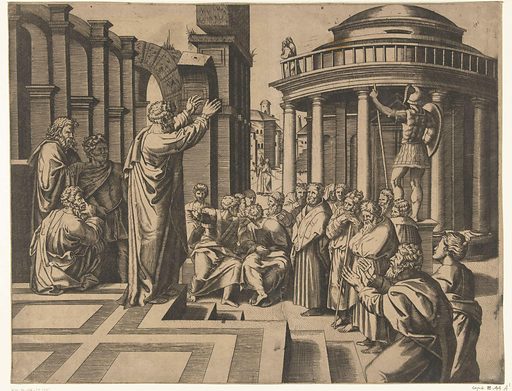
“The Galatians, You and me, are Children of God’s Promise.

An Overview of Galatians

By Joe Guagliardo

Galatians 4:21-31

“The Galatians, You and Me, are Children of God’s Promise.”

June 28, 2023

In my devotion, dated June 21, on the book of Galatians, I spoke of the challenging time I had distinguishing between when Jesus was telling a Simile, Parable, or Metaphor.

In today’s story from Galatians, Paul tells an allegory.

“A parable takes a common, everyday incident or occurrence that presents a general truth and puts generic people into it. And uses it to illustrate (is like) a spiritual truth the teacher wants to explain.”

“People’s Bible Commentary, Ephesians, Pp. 81.”

“The word “allegory” comes from the Latin “allegoria,” meaning speaking to imply something else. An allegory is a simple story that represents a larger point about society or human nature, whose different characters may represent real-life figures.”

https://www.grammarly.com/blog/allegory

In today’s verses, Paul uses the story of Isaac and Ishmael to get his point across.

 “Tell me, you who want to be under the law, are you not aware of what the law says? For it is written that Abraham had two sons, one by the slave woman and the other by the free woman. His son by the slave woman was born according to the flesh, but his son by the free woman was born as the result of a divine promise.

These things are being taken figuratively: The women represent two covenants. One covenant is from Mount Sinai and bears children who are to be slaves: This is Hagar. Now Hagar stands for Mount Sinai in Arabia and corresponds to the present city of Jerusalem because she is in slavery with her children. But the Jerusalem that is above is free, and she is our mother. For it is written:

“Be glad, barren woman,

you who never bore a child;

shout for joy and cry aloud,

you who were never in labor;

because more are the children of the desolate woman

than of her who has a husband.” 4:27 Isaiah 54:1

Now you, brothers and sisters, like Isaac, are children of promise. At that time, the son born according to the flesh persecuted the son born by the power of the Spirit. It is the same now. But what does Scripture say? “Get rid of the slave woman and her son, for the slave woman’s son will never share in the inheritance with the free woman’s son.” 4:30 Gen. 21:10 Therefore, brothers and sisters, we are not children of the slave woman, but of the free woman.”

Galatians 4:21-31

You probably understand Paul’s point if you have read the above passages. But let’s take a few moments and unpack a few items.

In the Old Testament, the commandments are often referred to as the law. God expected His people, the Israelites, to follow them implicitly. Although, He knew that it would be impossible for people to follow them strictly. That is why, in the Old Testament, we find the promise of a Savior who would wipe away our sins. Jesus was and is that Savior.

In the above verses, Paul uses Isaac and Ishmael as an example. Abraham had two sons, Isaac and Ishmael. One, Ishmael was born of a servant/slave woman, Hagar. Isaac was born of Sarah, Abraham’s wife.

Why two children by different women? God promised Abraham and Sarah a child and that Abraham’s decedents would be more plentiful than the stars in the sky. But, as they were very old, Sarah told Abraham to sleep with her slave girl Hagar. Then, after Hagar had Ishmael, Sarah gave birth to Isaac. (Like most of us, they were impatient people.)

Eventually, Sarah had Abraham put Sarah and Ishmael out. There’s a lot more to it, but as a believer, I can see this was the beginning of Christianity (Isaac) and Islam (Ishmael). Between the two, there would forever be friction.

Read the entire story in Genesis 15-19.

The point is that Isaac was a child of promise by God. Ishmael was the son of a slave, not a free woman like Sarah.

So, this is what Paul writes to the Galatians:

“Now you, brothers and sisters, like Isaac, are children of promise. At that time, the son born according to the flesh persecuted the son born by the power of the Spirit. It is the same now. But what does Scripture say? “Get rid of the slave woman and her son, for the slave woman’s son will never share in the inheritance with the free woman’s son.” 4:30 Gen. 21:10 Therefore, brothers and sisters, we are not children of the slave woman, but of the free woman.”

The Galatians, like you and me, are children of the promise. Like Isaac, the Galatians, as well as you and I, are not children of slavery (to the law); instead, we are children of God’s promise through Jesus Christ. He died for our sins and freed us from the law so we might be saved by faith alone.

Paul speaks of the Galatian’s Conversion to Christianity

An Overview of Galatians

By Joe Guagliardo

Galatians 4:12-20; 2 Corinthians 12:7-10″

Paul speaks of the Galatian’s Conversion to Christianity.”

June 24, 2023

“In the biblical sense, conversion means a turning—a spiritual turning away from sin in repentance and to Christ in Faith. It is a dramatic turning away from one path in order to pursue an entirely new one.”

https://www.ligonier.org/learn/articles/what-true-conversion

In late 1988, my wife Kathy and I had a conversion of sorts. We had been brought up in the Catholic church. We had adopted our daughter, Heather, earlier in the year and wanted to have her baptized.

We had begun attending church after many years and had asked our best friends, Fred and Sue, to be the sponsors. The Catholic church said we couldn’t have them as sponsors, as they weren’t Catholic; they were Lutheran. My wife even called the Archdiocese about the situation, and they said the same thing. We had to have Catholics as our sponsors.

To make a long story short, we joined Fred and Sue’s church, Our Savior Lutheran. Fred and Sue became Heather’s godparents, and our life in the L.C.M.S. began.

In retrospect, a few things caused us pause, but Pastor Behring (looking down from heaven now) sat with us for over an hour and allayed our fears. (Hell, and damnation for doing the wrong thing) 😊

That brings us to today’s lesson. In the Bible passages below, Paul reminds the Galatians of their conversion to Christianity. He also talks about how upset he is that the Zealots continue to try and draw the new converts down a path of alienation from Christ.

Let’s take a few moments to peruse today’s reading.

I plead with you, brothers and sisters, become like me, for I became like you. You did me no wrong. As you know, it was because of an illness that I first preached the gospel to you, and even though my illness was a trial to you, you did not treat me with contempt or scorn. Instead, you welcomed me as if I were an angel of God as if I were Christ Jesus himself. Where, then, is your blessing of me now? I can testify that, if you could have done so, you would have torn out your eyes and given them to me. Have I now become your enemy by telling you the truth?

Those people are zealous to win you over but for no good. What they want is to alienate you from us so that you may have zeal for them. It is fine to be zealous, provided the purpose is good, and to be so always, not just when I am with you. My dear children, for whom I am again in the pains of childbirth until Christ is formed in you, how I wish I could be with you now and change my tone because I am perplexed about you!”

Galatians 4:12-20

Paul speaks of his illness or infirmities. Some believe that the reason he stopped in Galatia at all was because of his condition.

“As you know, it was because of an illness that I first preached the gospel to you, and even though my illness was a trial to you, you did not treat me with contempt or scorn.”

If you have read any of Paul’s writings, you know he suffered from some type of infirmity.

In 2 Corinthians 12:7-10, Paul says:

“Therefore, in order to keep me from becoming conceited, I was given a thorn in my flesh, a messenger of Satan, to torment me. Three times I pleaded with the Lord to take it away from me. But he said to me, “My grace is sufficient for you, for my power is made perfect in weakness.” Therefore, I will boast all the more gladly about my weaknesses so that Christ’s power may rest on me. That is why, for Christ’s sake, I delight in weaknesses, in insults, in hardships, in persecutions, in difficulties. For when I am weak, then I am strong.”

We know that Paul suffered from some type(s) of infirmity(ties). But we don’t know precisely what Paul’s illnesses were. Interestingly, some say Paul was the greatest promoter of the Christian Faith that ever lived. Yet he, like you and me, still suffered from earthly illnesses.

“God does not promise to bless Christians by removing suffering but to bless Christians through suffering. Jesus suffered not so that we might not suffer but so that in our suffering, we would become like Him. God uses our suffering to bring about good.”

(Galatians for you, Timothy Keller, Pp.111.)

Paul was warmly greeted and accepted by the Galatians. Yet now, they are ready to, Jump ship, so to speak, and follow the Zealots (Judaizers).

Paul is okay with the Galatians, or any of us, being zealous. But it needs to be for the right reasons.

“It is fine to be zealous, provided the purpose is good, and to be so always, not just when I am with you.”

 As I’ve mentioned before, the Judaizers believed in Jesus. Still, they added that you must adhere to the Law, celebrate holidays, and do works for salvation. The Galatians welcomed Paul’s teaching of Faith without works. But now they saw Paul in their rearview mirrors and were about to change to their old ways.

“My dear children, for whom I am again in the pains of childbirth until Christ is formed in you, how I wish I could be with you now and change my tone because I am perplexed about you!”

Paul finishes these verses with his bewilderment that the Galatians were ready to throw his (Paul’s) teachings out the window and accept the teaching of Faith and works that the Judaizers promoted.

The Galatians’ predicament is not unlike what we see today. People accept leaders and their beliefs when they are in front of them or align with what is easy for them.

Jesus never said salvation was easy. It’s a hard road for you and me to travel until His eventual return.

“Are you a minor heir, Paul says, No!

An Overview of Galatians

By Joe Guagliardo

Galatians 4:1-11

“Are you a minor heir, Paul says, No!”

June 21, 2023

Parables, Parables, Parables

When I was studying to be a lay minister almost 30 years ago, I had trouble with several things. But, I had the most challenging time distinguishing between when Jesus was telling a Simile, Parable, or Metaphor.

This may seem unusual to you, but I did not do well in Elementary or High school English classes.

So, for you first-timers, here’s the difference.

Simile – a figure of speech involving the comparison of one thing with another thing of a different kind, used to make a description more emphatic or vivid (e.g., as brave as a lion, crazy like a fox ).

Parable – a simple story used to illustrate a moral or spiritual lesson, as told by Jesus in the Gospels.

“the parable of the blind men and the elephant”

Metaphor – a figure of speech in which a word or phrase is applied to an object or action to which it is not literally applicable.

(Her eyes were diamonds. He is a shining star. The snow is a white blanket.)

(Online Google Dictionary)

It seems very basic, but I had a problem with it, at the time. So today, let me introduce you to our next devotion, saying it begins with a parable.

In today’s lesson, the Apostle tells a Parable. Let’s take a look.

“What I am saying is that as long as an heir is underage, he is no different from a slave, although he owns the whole estate. The heir is subject to guardians and trustees until the time set by his father. So also, when we were underage, we were in slavery under the elemental spiritual forces (4:3 Or under the basic principles) of the world. But when the set time had fully come, God sent his Son, born of a woman, born under the law, to redeem those under the law, that we might receive adoption to sonship. (4:5 The Greek word for adoption to sonship is a legal term referring to the full legal standing of an adopted male heir in Roman culture.) Because you are his sons, God sent the Spirit of his Son into our hearts, the Spirit who calls out, “Abba, Father.” So, you are no longer a slave but God’s child, and since you are his child, God has made you also an heir.

Formerly, when you did not know God, you were slaves to those who, by nature, are not gods. But now that you know God—or rather are known by God—how is it that you are turning back to those weak and miserable forces (4:9 Or principles)? Do you wish to be enslaved by them all over again? You are observing special days and months and seasons and years! I fear for you that somehow I have wasted my efforts on you.”

Galatians 4:1-11

As we see in Paul’s writing above, he uses a parable as an example for the Galatians. Paul is comparing an heir of an estate to when it was time for us to attain eternal life through Jesus.

And the heir of an estate, even though he is next in line to be the owner, doesn’t have full reign of the estate until he/she comes of age. The same is true for the Jews and Gentiles. They were underage (not ready) for a savior. Finally, God sent His only Son, in what the English Standard Version of the Bible says:

“But when the fullness of time had come, God sent forth his Son, born of woman, born under the law, to redeem those who were under the law, so that we might receive adoption as sons.”

Galatians 4:4-5 (English Standard Version)

In other words, Paul is saying when the time was right, God’s promise was fulfilled. He sent His only Son to save the world and gave us the opportunity to no longer live under the law.

Finally, Paul had preached to the Galatians that they were saved by Grace, through Faith, not by keeping (attempting to keep) the law perfectly. Unfortunately, the Galatians were considering reverting back to their old ways.

The Galatians were beginning to go back to their old pagan ways. Some were once again trying to satisfy idols through sacrifices and piousness. To say the least, Paul is angry with the Galatians. He can’t believe they are willing to back to their old ways and give up all the freedom they have been given through Christ.

As I said, Paul was angry. Perhaps that’s why he finished verse 11 by saying:

“I fear for you that somehow I have wasted my efforts on you.”

God never gives up on us, but He will move on when He feels His efforts are wasted on you.

What is the Law, compared to God’s promise?

An Overview of Galatians

By Joe Guagliardo

Galatians 3: 15-29

“What is the Law, compared to God’s promise?”

June 18, 2023

We hear the words often in church, “As Christians, we are free from the law.” This is absolutely true. But being free from the Law doesn’t mean we can return to lawlessness. We can’t do whatever we want.

Even in the society we live in (U.S.A.), we have laws to adhere to. We can’t go around being reckless and killing people, stealing from others, nor can we steal from others. So, what does it mean to be free from the Law?

In his book, Galatians for You, Timothy Keller says about Paul’s words in Galatians:

“In the flow of his letter to the Galatians, Paul has established that we are saved, justified, redeemed only by faith in Christ and not through any righteousness of our own.”

(Timothy Keller, Galatians for You, Pp.77)

The Law has its place. The problem is we are imperfect humans and cannon keep the Law perfectly. So what hope do we have? Our hope is in Jesus.

Let’s take a look at Galatians 3:15-29 and see what Paul means.

“Brothers and sisters, let me take an example from everyday life. Just as no one can set aside or add to a human covenant that has been duly established, so it is in this case. The promises were spoken to Abraham and to his Seed. Scripture does not say “and to seeds,” meaning many people, but “and to your seed,” meaning one person, who is Christ. What I mean is this: The Law introduced 430 years later does not set aside the covenant previously established by God and thus do away with the promise. For if the inheritance depends on the Law, then it no longer depends on the promise; but God in his grace gave it to Abraham through a promise.

Why, then, was the Law given at all? It was added because of transgressions until the Seed to whom the promise referred had come. The Law was given through angels and entrusted to a mediator. A mediator, however, implies more than one party; but God is one.

Is the Law, therefore, opposed to the promises of God? Absolutely not! For if a law had been given that could impart life, then righteousness would certainly have come by the Law. But Scripture has locked up everything under the control of sin so that what was promised, being given through faith in Jesus Christ, might be given to those who believe.

Before the coming of this faith (3:22,23 Or through the faithfulness of Jesus… 23 Before faith came), we were held in custody under the Law, locked up until the faith that was to come would be revealed. So, the Law was our guardian until Christ came so that we might be justified by faith. Now that this faith has come, we are no longer under a guardian.

So, in Christ Jesus, you are all children of God through faith, for all of you who were baptized into Christ have clothed yourselves with Christ. There is neither Jew nor Gentile, neither slave nor free, nor is there male and female, for you are all one in Christ Jesus. If you belong to Christ, then you are Abraham’s Seed and heirs according to the promise.”

Galatians 3:15-29

God’s Law depends on our performance. It depends on us being perfect. We, you and me, are anything but perfect. God knew that and knows that. That is why He (God) gave us the Gospel covenant. Paul tells us that we are saved by grace, God’s grace. God’s grace is a free gift, and it is far superior to the Law.

God implemented the Law because we were sinful.

“Why, then, was the Law given at all? It was added because of transgressions until the Seed to whom the promise referred had come.”

As I said earlier, we were a lawless and sinful people. We needed God’s Law for something to adhere to, so we might not be reckless and immoral.

But the Law was a prequel to God’s Grace.

“So, the Law was our guardian until Christ came that we might be justified by faith. Now that this faith has come, we are no longer under a guardian.”

Mankind needed something. Were we justified under the Law? No, because we could not keep it perfectly. For us, it was an unobtainable goal.

Then Jesus came:

So, in Christ Jesus, you are all children of God through faith, for all of you who were baptized into Christ have clothed yourselves with Christ. There is neither Jew nor Gentile, neither slave nor free, nor is there male and female, for you are all one in Christ Jesus. If you belong to Christ, then you are Abraham’s Seed and heirs according to the promise.”

I simply can’t say it any better than Paul. In God’s eyes, we are all the same. He loves each and every one of us. God’s Son, Jesus, was not sent to uphold the Law. He (Jesus) was sent to fulfill the Law because we couldn’t then and can’t now. To this day, there isn’t one of us that has kept God’s word perfectly.

That’s why we need Jesus. He is the fulfillment of the Law.

Do we still have earthly laws we need to keep? Yes. Should we still try to keep God’s commands? Yes.

But Jesus has freed us from the hopelessness of sin. We are saved by God’s Grace and through our belief in Jesus Christ.

Always remember this, Jesus didn’t live, teach, suffer, and die and come back to life to show off. He did it for you and me. So, one day, we could spend an eternity with him.

Faith Alone

An Overview of Galatians

By Joe Guagliardo

Galatians 3:1-14

“Faith Alone”

June 14, 2023

The Reformation gave us five Solas. The word Sola is Latin and means alone. It’s where we get the word, solo or unaccompanied.

The five Solas are that came from the Reformed church of the Reformation are:

Sola Scriptura – (Scripture alone) – God’s Word, the Bible, is the final word of God that we live under

Solus Christus (Christ Alone)- Jesus is a gift given to us by God for our Salvation

Sola Fide – (Faith Alone) – We are saved by Faith Alone, not by Faith and works

Sola Gratia – (Grace Alone)- We are justified with God by our Faith, in His Son Jesus Christ

Solo Deo Gloria – (Glory to God Alone) – Only God receives all the Glory for what He did for us by sending His Son Jesus to save us

All of the Solas are important to us in the Christian Faith. Today, let’s focus in on Sola Fide. We are saved by Faith alone.

As Paul continues his letter to the Galatians, he explains, once again to the Galatians and us, that we are saved by Faith Alone.

“You foolish Galatians! Who has bewitched you? Before your very eyes, Jesus Christ was clearly portrayed as crucified. I would like to learn just one thing from you: Did you receive the Spirit by the works of the law or by believing what you heard? Are you so foolish? After beginning by means of the Spirit, are you now trying to finish by means of the flesh? (3:3 In contexts like this, the Greek word for flesh (sarx) refers to the sinful state of human beings, often presented as a power in opposition to the Spirit.) Have you experienced (3:4 Or suffered)  so much in vain—if it really was in vain? So again, I ask, does God give you his Spirit and work miracles among you by the works of the law or by your believing what you heard? So also, Abraham “believed God, and it was credited to him as righteousness.” (3:6 Gen. 15:6)

Understand, then, that those who have Faith are children of Abraham. Scripture foresaw that God would justify the Gentiles by Faith and announced the gospel in advance to Abraham: “All nations will be blessed through you.” (3:8 Gen. 12:3; 18:18; 22:18) So those who rely on Faith are blessed along with Abraham, the man of Faith.

For all who rely on the works of the law are under a curse, as it is written: “Cursed is everyone who does not continue to do everything written in the Book of the Law.” Clearly, no one who relies on the law is justified before God, because “the righteous will live by faith.” (3:11 Hab. 2:4) . The law is not based on Faith; on the contrary, it says, “The person who does these things will live by them.” Christ redeemed us from the curse of the law by becoming a curse for us, for it is written: “Cursed is everyone who is hung on a pole.” (3:13 Deut. 21:23) He redeemed us in order that the blessing given to Abraham might come to the Gentiles through Christ Jesus, so that by Faith we might receive the promise of the Spirit.”

Galatians 3:1-14

Paul now begins to lay out his case for being saved by Faith alone. He starts his dialogue by being somewhat harsh with the Galatians.

“You foolish Galatians! Who has bewitched you?”

Paul comes right out and asks the Galatians again and again:

“So again, I ask, does God give you his Spirit and work miracles among you by the works of the law, or by your believing what you heard?”

To me, Paul makes his case for Faith alone when he talks about Abraham. I find his case to be made with this one simple statement.

“So also, Abraham “believed God, and it was credited to him as righteousness.”

You see, even in the Old Testament, God was telling us that there would be a time when Grace and Faith would go hand in hand. God even foretells this to Abraham.

God tells Abraham that:

“All nations will be blessed through you.”

Abraham was a man of Faith, and because of this, he was made righteous before God. Not because of what he did or would do but because of God’s amazing grace.

Paul doesn’t leave his argument for, by Grace through Faith there. He gives us another example in the book of Habakkuk.

“Cursed is everyone who does not continue to do everything written in the Book of the Law.” Clearly, no one who relies on the law is justified before God, because “the righteous will live by faith.”

As I read these passages, I was amazed at how God dropped the promise of a new world where we would no longer be expected to keep the law perfectly. Even in the book of Habakkuk it is stated that”

“The righteous will live by faith.”

Finally, Paul says:

“He redeemed us in order that the blessing given to Abraham might come to the Gentiles through Christ Jesus, so that by faith we might receive the promise of the Spirit.”

Paul wasn’t pulling any punches with the Galatians. The above words are challenging and also aimed at you and me. We are Gentiles. Jesus died for all of us. And we receive the Holy Spirit through God’s Grace and our Faith in Jesus Christ. He (The Holy Spirit) guides us, corrects us when necessary and is with us throughout our lives. Living by the law can’t do that because we cannot uphold it perfectly.

Reprimanded

An Overview of Galatians

By Joe Guagliardo

Galatians 2:11-24

“Reprimanded”

June 11, 2023

During my life, I’ve been admonished many times. I’m guessing we all have. I felt like I couldn’t do anything right when I was young. My mom or dad constantly admonished me for one thing or another.

When I was in school, I was either admonished by a teacher or sent to the principal’s office for a problem I was involved in.

As an adult, we all get admonished for one thing or another. Our spouse might correct us for something we’ve done wrong, or our employer may correct us for a mistake we’ve made.

Even Peter, the great Apostle, was admonished by a fellow follower of Christ, Paul.

Let’s take a moment and examine the circumstances of this reprimand.

“When Cephas (Peter) came to Antioch, I opposed him to his face because he stood condemned. For before certain men came from James, he used to eat with the Gentiles. But when they arrived, he began to draw back and separate himself from the Gentiles because he was afraid of those who belonged to the circumcision group. The other Jews joined him in his hypocrisy, so that by their hypocrisy, even Barnabas was led astray.

When I saw that they were not acting in line with the truth of the gospel, I said to Cephas in front of them all, “You are a Jew, yet you live like a Gentile and not like a Jew. How is it, then, that you force Gentiles to follow Jewish customs?

“We who are Jews by birth and not sinful Gentiles know that a person is not justified by the works of the law, but by Faith in Jesus Christ. So, we, too, have put our Faith in Christ Jesus that we may be justified by Faith in Christ and not by the works of the law because, by the works of the law, no one will be justified.

“But if, in seeking to be justified in Christ, we Jews find ourselves also among the sinners, doesn’t that mean that Christ promotes sin? Absolutely not! If I rebuild what I destroyed, then I really would be a lawbreaker.

“We who are Jews by birth and not sinful Gentiles know that a person is not justified by the works of the law, but by Faith in Jesus Christ. So, we, too, have put our Faith in Christ Jesus that we may be justified by Faith in Christ and not by the works of the law because, by the works of the law, no one will be justified.

Acts 2:11-24

There is a bit of discrepancy among some scholars as to when the above passage occurred. For the sake of argument and what I believe to be accurate, this reprimand of Peter by Paul happened sometime in 53 A.D., after the Jerusalem Council.

That fact makes this passage even more critical. It had been declared that the Gentiles were saved by Grace through Faith in Jesus Christ. Peter and the other Apostles were to seek out Jews, preach, and convert them to Christianity. While Paul and his followers would do the same with the Gentiles.

Now, after only two years since the Council, we find Peter uncomfortable dining with Gentiles and holding firm to the outcome of the Jerusalem Council. (We sometimes find Peter preaching and teaching Gentiles and Paul doing the same to Jews.)

Paul was allowing himself to ever so slightly side with the Judaizers of the time, and he admonished him in front of others that what he was doing was wrong. Paul comes right out and says to Peter:

“We who are Jews by birth and not sinful Gentiles know that a person is not justified by the works of the law, but by Faith in Jesus Christ. So, we, too, have put our Faith in Christ Jesus that we may be justified by Faith in Christ and not by the works of the law because, by the works of the law, no one will be justified.”

Paul admonished and reminded Peter that we are saved by Faith, including the Gentiles, and that works would not justify them or anyone before God.

Paul’s final words in this passage summarize his beliefs and where he feels Peter was missing the mark.

“We who are Jews by birth and not sinful Gentiles know that a person is not justified by the works of the law, but by Faith in Jesus Christ. So, we, too, have put our Faith in Christ Jesus that we may be justified by Faith in Christ and not by the works of the law because, by the works of the law, no one will be justified.”

Paul nails it. He says, what we still believe today. It’s something that has to be reiterated over and over again. B.G.T.F. This is the only way to the Father. It is through the Son, our Lord, and Savior, Jesus Christ.

We all have our part to do

An Overview of Galatians

By Joe Guagliardo

1 Corinthians 12:4-11; Galatians 2:1-10

“We all have our part to do”

June 9, 2023

Whether you believe it or not, we all have a calling from God. Some of us are laborers, and others own companies. God calls us to do these jobs. As St. Paul says in 1 Corinthians, these types of gifts are “Given for the common good.”

Let’s take a moment and look at what Paul has to say about Spiritual Gifts:

“There are different kinds of gifts, but the same Spirit distributes them. There are different kinds of service, but the same Lord. There are different kinds of working, but in all of them and in everyone, it is the same God at work.

Now to each one, the manifestation of the Spirit is given for the common good. To one there is given through the Spirit a message of wisdom, to another a message of knowledge by means of the same Spirit, to another faith by the same Spirit, to another gifts of healing by that one Spirit, to another miraculous powers, to another prophecy, to another distinguishing between spirits, to another speaking in different kinds of tongues,(12:10 Or languages) and to still another the interpretation of tongues. (12:10 Or languages) All these are the work of one and the same Spirit, and he distributes them to each one, just as he determines.”

1 Corinthians 12:4-11

So, each and every one of us has been given a Spiritual Gift. As I mentioned previously, gifts sometimes change throughout our lives. God called me to be a youth minister, and intermittently I also preached. Now, as I am retired, God has given me the gift of writing (although I believe I could still preach a pretty good sermon if given a chance) 😊

In Paul’s letter to the Galatians, he explains that God gave him the gift and appointment to preach and teach to the Galatians. (Although there are times, such as in the synagogues, Paul does preach to the Jews).

In Paul’s letter to the Galatians, he tells the Galatians that God has chosen him and his followers to preach to the Gentiles. In contrast, God chose Peter and his followers to preach to the Jews.

Paul is received by the other Apostles’

“Then, after fourteen years, I went up again to Jerusalem, this time with Barnabas. I took Titus along, also. I went in response to a revelation, and meeting privately with those esteemed as leaders, I presented to them the gospel that I preach among the Gentiles. I wanted to be sure I was not running and had not been running my race in vain. Yet not even Titus, who was with me, was compelled to be circumcised, even though he was a Greek. This matter arose because some false believers had infiltrated our ranks to spy on the freedom we have in Christ Jesus and to make us slaves. We did not give in to them for a moment so that the truth of the gospel might be preserved for you.

As for those who were held in high esteem—whatever they were makes no difference to me; God does not show favoritism—they added nothing to my message. On the contrary, they recognized that I had been entrusted with the task of preaching the gospel to the uncircumcised (2:7, That is, Gentiles) just as Peter had been to the circumcised. (2:7 That is, Jews; also in verses 8 and 9) For God, who was at work in Peter as an apostle to the circumcised, was also at work in me as an apostle to the Gentiles. James, Cephas (2:9 That is, Peter; also, in verses 11 and 14) , and John, those esteemed as pillars, gave me and Barnabas the right hand of fellowship when they recognized the grace given to me. They agreed that we should go to the Gentiles, and they to the circumcised. All they asked was that we should continue to remember the poor, the very thing I had been eager to do all along.

You may recall Paul had initially met and stayed with Peter for 15 days fourteen years ago. Now there was trouble brewing. Judaizers were prostituting Jesus’ Gospel, and something had to be done.

Please look at my previous devotion from June 5, entitled “The Jerusalem Council.” The findings from that meeting of Paul and the original 12 Apostles are described there. (Also read Acts 15)

As described in Galatians 2:1-10, Paul is visiting Peter and the Apostles for the first time in fourteen years. He, Paul’s conversion had happened just 17 years before.

These passages that Paul writes about (2:1-10) in Galatians brought all the Apostles together, and they were resolute in their findings. They adhered to what Paul was saying. We are saved by Grace through Faith, and that he was called by Jesus to preach to the Jews.

In Galatia, Paul pleads with his followers to listen to and adhere to his belief. We are saved by Faith alone; no works are necessary. If they or we would believe that works are required for salvation, then what Christ died on the Cross for was nothing.

He died on the Cross for our sins, not for our sins if we do something.

Finally, the Apostles sent Paul on his way with their blessings. He, Paul, and his followers had been called by God to preach and reach out to the Gentiles, just like Peter and the other apostles were called by God to preach to the Jews.

(Just as we have our part to do in reaching the people of the world, Paul, Peter, and all of the Apostles had theirs).

All that was asked of them, Paul and his followers, was to remember the poor. This was not a problem as they felt called to do it.

But the Judaizers were not so easily overcome. As we will see as we continue in our journey of Galatians.

Called by God

An Overview of Galatians

By Joe Guagliardo

Galatians 1:11-24

“Called by God”

June 7, 2023

In the church, we hear the words “Called by God” quite often. Okay, a person is called by God to do something. But what does that mean?

Moses was called by God to lead the Israelites out of captivity. David was called by God to be the king of Israel. The Apostles were called by God (Jesus) to learn and make disciples.

Pastors are called by God to lead the churches throughout the world. The list goes on and on. I believe God called me to be a Youth Minister and serve the church for many years.

What does it mean to be called?

“God has chosen to carry out His work in the world through those who are saved. He has determined the tasks He wants each of us to do; our job is to serve Him by accomplishing what He’s planned for us.”

(Christianity.com)

The interesting thing is that at different stages in life, our call sometimes changes. I was called by God to be a Youth Minister. At the age of 65, I retired. I didn’t stop doing God’s work, but it did change. Now, I am writing.

I’ve written a book, “Adventures in Youth Ministry,” plus I write Bible studies and devotions like this one. God has changed my call to be a disciple in a different way.

Obviously, Paul was called by God to be an Apostles and preach, teach, and show the Gentiles the Way to eternal life.

Paul Called by God

“I want you to know, brothers and sisters, that the gospel I preached is not of human origin. I did not receive it from any man, nor was I taught it; rather, I received it by revelation from Jesus Christ.

For you have heard of my previous Way of life in Judaism, how intensely I persecuted the church of God and tried to destroy it. I was advancing in Judaism beyond many of my own age among my people and was extremely zealous for the traditions of my fathers. But when God, who set me apart from my mother’s womb and called me by his grace, was pleased to reveal his Son in me so that I might preach him among the Gentiles, my immediate response was not to consult any human being. I did not go up to Jerusalem to see those who were apostles before I was, but I went into Arabia. Later I returned to Damascus.

Then after three years, I went up to Jerusalem to get acquainted with Cephas (1:18 That is, Peter) and stayed with him fifteen days. I saw none of the other apostles—only James, the Lord’s brother. I assure you before God that what I am writing you is no lie.

Then I went to Syria and Cilicia. I was personally unknown to the churches of Judea that are in Christ. They only heard the report: “The man who formerly persecuted us is now preaching the faith he once tried to destroy.” And they praised God because of me.”

Galatians 1:11-24

Paul highlights several items in these verses. First and foremost, Paul states that Christ called and converted him. We only need to read about Paul in the book of Acts chapter nine to know and believe this.

“Meanwhile, Saul was still breathing out murderous threats against the Lord’s disciples. He went to the high priest and asked him for letters to the synagogues in Damascus so that if he found any there who belonged to the Way, whether men or women, he might take them as prisoners to Jerusalem. As he neared Damascus on his journey, suddenly, a light from heaven flashed around him. He fell to the ground and heard a voice say to him, 

“Saul, Saul, why do you persecute me?”

“Who are you, Lord?” Saul asked.

“I am Jesus, whom you are persecuting,” he replied. “Now get up and go into the city, and you will be told what you must do.”

The men traveling with Saul stood there speechless; they heard the sound but did not see anyone. Saul got up from the ground, but when he opened his eyes, he could see nothing. So, they led him by the hand into Damascus. For three days, he was blind and did not eat or drink anything.

In Damascus, there was a disciple named Ananias. The Lord called to him in a vision, “Ananias!”

“Yes, Lord,” he answered.

The Lord told him, “Go to the house of Judas on Straight Street and ask for a man from Tarsus named Saul, for he is praying. In a vision, he has seen a man named Ananias come and place his hands on him to restore his sight.”

“Lord,” Ananias answered, “I have heard many reports about this man and all the harm he has done to your holy people in Jerusalem. And he has come here with authority from the chief priests to arrest all who call on your name.”

But the Lord said to Ananias, “Go! This man is my chosen instrument to proclaim my name to the Gentiles and their kings and to the people of Israel. I will show him how much he must suffer for my name.”

Then Ananias went to the house and entered it. Placing his hands-on Saul, he said, “Brother Saul, the Lord—Jesus, who appeared to you on the road as you were coming here—has sent me so that you may see again and be filled with the Holy Spirit.” Immediately, something like scales fell from Saul’s eyes, and he could see again. He got up and was baptized, and after taking some food, he regained his strength.”

Acts 9:1-19

Paul has an incredibly, credible story in the Book of Acts that specifically details Christ calling him to be an Apostle. Paul reiterates his call to the Galatians.

We have a detailed account written down by Luke. His account details the circumstances of Paul’s/Saul’s conversion.

An interesting question you or I might ask is, “Why did Paul take three years before he reached out to and met Peter?”

“Then, after three years, I went up to Jerusalem to get acquainted with Cephas (1:18 That is, Peter) and stayed with him fifteen days.”

Galatians 1:18

During the three years, Paul was set apart from the other Apostles. Although Paul traveled and taught during these three years, he was still a student of Christ. God guided him and schooled him directly.

“When he did go (to Jerusalem to meet Peter), it was not to receive instruction or approval for his message. Rather, he went to get acquainted with the great apostle Peter.”

(Peoples Bible Commentary, Galatian/Ephesians, Pp.29)

Finally, after meeting with Peter (and meeting James, the brother of Jesus), Paul stayed in Syria and Cilicia.

While in Jerusalem, Paul talked and debated with Grecian Jews. They did not appreciate what he had to say, and, tried to kill him. He was then sent to Syria for his own protection.

Although Paul was known by the people in this area to have persecuted the Jews,

 “The man who formerly persecuted us in so preaching the faith he once tried to destroy. And they praised God because of Him.”

Galatians 1:23b-24

Once again, Paul was emphasizing to the Galatians that he was called by God, had the approval of the other Apostles, and was not making up anything that he spoke or taught.

The Jerusalem Council

An Overview of Galatians

By Joe Guagliardo

Acts 15:1-21

“The Jerusalem Council”

June 5, 2023

I mentioned in my earlier devotion that Paul’s writing to the Galatians had quite a different tone than many other letters he and other New Testament writers typically had.

From His demeanor, we can presume that this writing to the Galatians was during his second missionary journey and after the Jerusalem Council. For this reason, I would like to talk about the discussions and outcome of that council, which probably occurred during about 50 C.E/A.D.

The heart of the problems that Paul, his followers, and the Apostles were having was with Judaizers.

“The Judaizers were a group of early Christians that included both Jewish and non-Jewish converts to the Faith. They insisted that all converts must identify with the nation of Israel and observe the Law of Moses in order to truly have the favor of God. Most scholars believe that Paul’s letter to the Galatians was written to refute the Judaizers’ teaching”.

(Classroom.synonym.com)

The Judaizers were so-called believers, but they insisted that the Gentiles should maintain specific laws (see above). The problem for Paul and the Apostles with that line of thought was that, what Jesus did, dying on the Cross, wasn’t enough. So, the Judaizers believed in Faith and Works. While Paul and the Apostles adhered to the doctrine of, By Grace (God’s), through Faith (Believe in Jesus and what He accomplished for us by dying on the Cross.

Let’s take a look at Act 15:1-21.

The Council at Jerusalem

“Certain people came down from Judea to Antioch and were teaching the believers: “Unless you are circumcised, according to the custom taught by Moses, you cannot be saved. (Judaizers).” This brought Paul and Barnabas into sharp dispute and debate with them. So, Paul and Barnabas were appointed, along with some other believers, to go up to Jerusalem to see the apostles and elders about this question. The church sent them on their way, and as they traveled through Phoenicia and Samaria, they told how the Gentiles had been converted. This news made all the believers very glad. When they came to Jerusalem, they were welcomed by the church and the apostles and elders, to whom they reported everything God had done through them.

Then some of the believers who belonged to the party of the Pharisees stood up and said, “The Gentiles must be circumcised and required to keep the law of Moses.”

The apostles and elders met to consider this question. After much discussion, Peter got up and addressed them: “Brothers, you know that some time ago God made a choice among you that the Gentiles might hear from my lips the message of the gospel and believe. God, who knows the heart, showed that he accepted them by giving the Holy Spirit to them, just as he did to us. He did not discriminate between us and them, for he purified their hearts by Faith. Now then, why do you try to test God by putting on the necks of Gentiles a yoke that neither we nor our ancestors have been able to bear? 

No! We believe it is through the grace of our Lord Jesus that we are saved, just as they are.”

The whole assembly became silent as they listened to Barnabas and Paul telling about the signs and wonders God had done among the Gentiles through them. When they finished, James spoke up. “Brothers,” he said, “listen to me. Simon (15:14 Greek Simeon, a variant of Simon; that is, Peter) has described to us how God first intervened to choose a people for his name from the Gentiles. The words of the prophets are in agreement with this, as it is written:

“‘After this, I will return

and rebuild David’s fallen tent.

Its ruins I will rebuild,

and I will restore it,

that the rest of mankind may seek the Lord,

even all the Gentiles who bear my name,

says the Lord, who does these things’

things known from long ago. 

“It is my judgment, therefore, that we should not make it difficult for the Gentiles who are turning to God. Instead, we should write to them, telling them to abstain from food polluted by idols, from sexual immorality, from the meat of strangled animals, and from blood. For the law of Moses has been preached in every city from the earliest times and is read in the synagogues on every Sabbath.”

Acts 15:1-21

All twenty-one verses of this portion of Acts are important. But the parts that really stick out for me are:

No! We believe it is through the grace of our Lord Jesus that we are saved, just as they are.”

These are Peter’s words. We are all saved through the Grace of God and our Faith that  Jesus’ died on the Cross for us. That’s it!

Finally, Peter’s words toward the end of these verses.

“It is my judgment, therefore, that we should not make it difficult for the Gentiles who are turning to God. Instead, we should write to them, telling them to abstain from food polluted by idols, from sexual immorality, from the meat of strangled animals, and from blood.”

Of course, we should be sexually moral and not hold up idols before ourselves (today, our favorite idol is money!).

For me, strangled animals (which we don’t do anymore) and blood mean not eating raw meat, which we’ve learned is bad for us.

As you’ve seen and will continue to see in Galatians, Paul was angry because the decision by the church at large had been made. We are saved, By Grace, Through Faith.

Paul had not been away from Galatia very long, and the people were already falling away from the one true God. Some were accepting Faith and Works, as put forth by the Judaizers. Because of this, as we continue our journey through Galatian, we will find Paul angry and holding to the doctrine of Grace and Faith, as he should, and we do.

Greetings

An Overview of Galatians

By Joe Guagliardo

Galatians 1:1-10

“Greetings”

Over the years, things haven’t changed much. When we meet someone on the street, we greet them. Another words, we say something like, “Hello, how are you,” “Yo, what’s up” and a variety of other sayings that I won’t use here.

We also greet each other when writing an email, on Tick Toc, Instagram, and many other sites we visit.

Perhaps the words have changed, but 2000 years ago, people greeted each other in much the same way.

The Gospel of Mark begins,

“The beginning of the gospel about Jesus Christ, the Son of God.”

Mark 1:1.

This is a relatively straightforward greeting, but it is a greeting.

 In the Gospel of Luke, Luke writes to an acquaintance, Theophilus.

“Many have undertaken to draw up an account of the things that have been fulfilled among us, just as they were handed down to us by those who from the first were eyewitnesses and servants of the word. With this in mind, since I myself have carefully investigated everything from the beginning, I too decided to write an orderly account for you, most excellent Theophilus, so that you may know the certainty of the things you have been taught.”

Luke 1:1-4

Luke succinctly addresses an acquaintance and tells him what is to come is quite important.

Finally, in Galatian, which we will look at in the coming days, Paul addresses a community.

Paul, an apostle—sent not from men nor by a man, but by Jesus Christ and God the Father, who raised him from the dead— and all the brothers and with me,

To the churches in Galatia:

Grace and peace to you from God our Father and the Lord Jesus Christ, who gave himself for our sins to rescue us from the present evil age, according to the will of our God and Father, to whom be glory for ever and ever. Amen.”

Galatians 1:1-4

Without exception, Paul’s greeting to the Galatians becomes a stern plea to not distort the words and life of Christ.

No Other Gospel

“I am astonished that you are so quickly deserting the one who called you to live in the grace of Christ and are turning to a different gospel—which is really no gospel at all. Evidently, some people are throwing you into confusion and are trying to pervert the gospel of Christ. But even if we or an angel from heaven should preach a gospel other than the one we preached to you, let them be under God’s curse! As we have already said, so now I say again: If anybody is preaching to you a gospel other than what you accepted, let them be under God’s curse!

Am I now trying to win the approval of human beings or of God? Or am I trying to please people? If I were still trying to please people, I would not be a servant of Christ.”

Galatians 1-10

Paul has learned that many of the Galatians who had converted to Christianity (The Way) while he was in Galatia have fallen away from his teachings. He is astonished that this has happened so soon after he has moved on to other cities preaching the Gospel of Jesus Christ.

One has to love Paul’s line,

“Evidently, some people are throwing you into confusion and trying to pervert the gospel of Jesus Christ.”

Galatians 1:7b

As you may have noticed, Paul doesn’t name names, and you will find that he seldom, if ever, names the names of those who are “perverting the gospel.” But he leaves no doubt in this letter that he is talking about Judaizers.

Judaizers convinced many of the Galatians who believed in Christ that they must follow the Mosaic Law (The law of Moses). (Circumcision, to name just one)

Paul’s point is that Mosaic law was superseded with the coming of Christ. In other words, Christ’s coming made that law obsolete.

When Paul says, “Let them be under God’s curse,” he uses a much stronger word than our interpretation. Paul says, “Anathema,” which means.

Let him be doomed to hell!

Paul comes right out and says that he is a servant of Christ. What does that make the Judaizers? The exact opposite. They are serving only themselves.

As we continue our reading and discussion, we will see how disturbing this falling away is to Paul. We’ll also be discussing, The Jerusalem Council, which Paul was a part of. Here we’ll better understand why Paul is so adamant in his teaching.