The story behind the Carol, Silent Night

Advent stories and messages from around the world

The story behind the Carol, Silent Night

December 9, 2021

Psalm 33:1; Isaiah 12:5; Psalm 96:1; Exodus 15:1
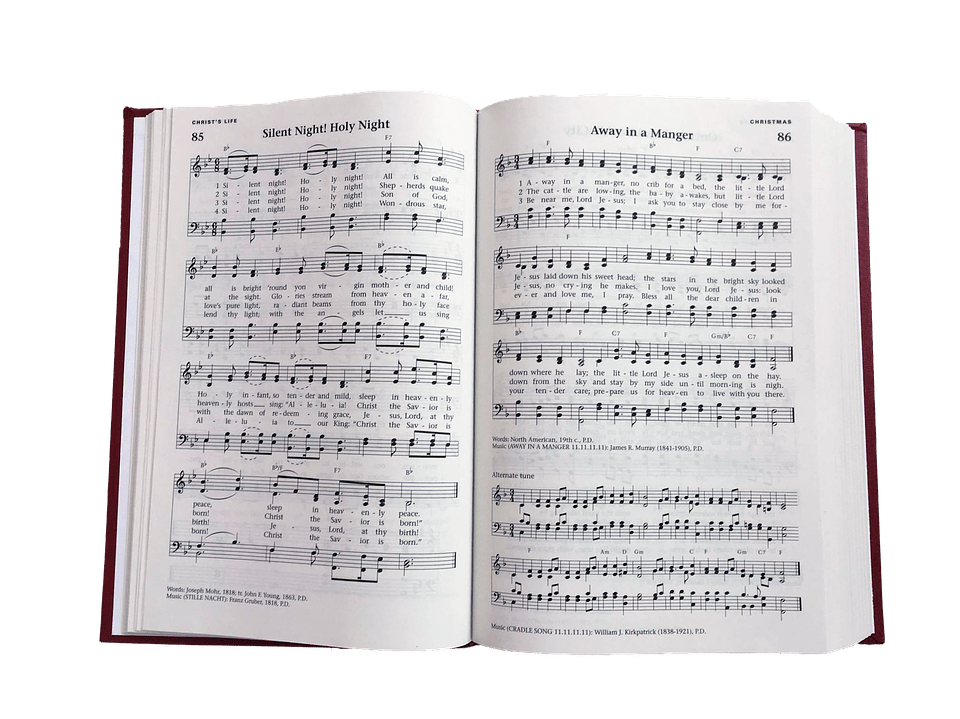
The Story of the beloved Christmas Carol, Silent Night, varies, depending on who’s telling it. Suffice it to say it was written in Germany. It is just as popular today as when first sung at St. Nicholas church in Oberndorf, Germany, over 200 years ago.

(The long and the short of it)

In the original German, Silent Night—or Stille Nacht —was created because Josef Mohr needed a carol for worship. On Christmas Eve of 1818, Mohr visited Franz Xaver Gruber with a poem he had written in 1816. Gruber quickly arranged the song to be played on a guitar with a choir because the church organ was broken. That evening at Midnight Mass, Gruber strapped on his guitar and led the congregation at St. Nicholas in the first rendition of Silent Night. (The Gospel Coalition.org)

*************************************************************************

Why do we sing in church? Why do we raise our voices in song to the Lord?

Let me share with you several verses from the Bible that come right out and tell us to “Sing to the Lord!”

Sing joyfully to the Lord, you righteous; it is fitting for the upright to praise him. Psalm 33:1

Sing to the Lord, for he has done glorious things; let this be known to all the world. Isaiah 12:5

Sing to the Lord a new song; sing to the Lord, all the earth. Psalm 96:1

Then Moses and the Israelites sang this song to the Lord: “I will sing to the Lord, for he is highly exalted. Both horse and driver he has hurled into the sea. Exodus 15:1

King David tells us to sing to the Lord, and so does Isaiah. Moses and the Israelites sang to the Lord in worship after He had closed the sea on the Egyptian army.

We pray to the Lord worshipfully. We read His Word and worship His deeds and Holy name. And we sing praises to the Lord, lifting our voices to Him in worship.

When I was younger, I did not like singing hymns. I thought they were boring written hundreds of years ago for a different time and generation. So as far as I was concerned, singing hymns was just singing a bunch of words no one uses anymore to totally outdated music.

That changed as I got older (much older😊). Now I read and pay attention to the words of the hymns we sing in church very closely. You know what? The music may not be contemporary (I still love contemporary Christian music). The words may sometimes be Old English and unfamiliar. But that’s okay. When you pay attention to the words of those old hymns, they are just as significant today as they were hundreds of years ago.

We praise the Lord in song because we love Him. And to Him, every word that comes out of our mouths when we praise Him is beautiful, even if we are off-key.

Every Christmas Eve Candlelight service I have attended always has the congregation sing Silent Night. To this day, I can’t get past singing the first verse without tearing and choking up to the point that I can’t sing.

The next time you sing Silent Night, remember it’s a hymn written over 200 years ago. Yet, people still enjoy singing it as they worship God and celebrate the birth of His Son Jesus. Amen.

Dear Lord. Thank you for all the wonderful music that has been written about you. Whether it was written 200 years ago by Josef Mohr or last year by Toby Mac, we know it is all beautiful to your ears as we sing your praises. Amen.


The Story Behind the Candy Cane

Advent stories and messages from around the world

December 8, 2021

The story behind the Candy Cane

Isaiah 53:2-9; Matthew 27:27-31

As Christmas approaches, there is quite a bit of baking and candy-making being done. My favorite Christmas cookie (some don’t consider it one) is an oatmeal raisin. Many folks like sugar cookies with sprinkles, almond crescent’s, and others prefer Pfeffernüsse.

There’s Hershey’s chocolate kisses, peppermint bark, caramel corn, and of course, candy canes on the candy side.

There’s a lot of history behind the candy cane’s origin. Here’s the story I told kids during my children’s message for 25 years.

There’s a story that is told; about 100 years ago, a candy maker in Indiana wanted to make a type of candy that would be a witness for his Savior, Jesus. So, he made the Christmas candy cane.

He put together some symbols in the candy cane that would remind us of the birth, life, and death of Jesus.

First, he made the candy cane white to symbolize the virgin birth and the sinlessness of Jesus.

Secondly, he made it hard to show the Solid foundation of the church and the firmness of the promises of God.

Third, he made it in the form of the letter J, to represent Jesus’ precious name, who came to earth as our Savior, and when you turn it over, what does it look like? It’s the staff of the Good Shepherd, Jesus.

Then he decided to stain it red. So, he put a broad red stripe on the candy cane. Why do you think he did that? (It represents the shedding of Jesus’ blood on the cross for our salvation.)

Finally, he put the 3 small stripes on the candy cane? What do you think the 3 small stripes are for? (They remind us of the scourging or whipping Jesus received before He was crucified.)

(Remember when you purchase candy canes, not all have the one broad and three small stripes on the – Bob’s Candy Canes always do)

***********************************************

Scourged, whipped, despised, and finally crucified for our sins. It’s slightly easier to read those words when we tie them into the candy cane story. Now take a look at what Jesus went through for us as you:

Read the words of Isaiah

“He had no beauty or majesty to attract us to him,

nothing in his appearance that we should desire him.

He was despised and rejected by mankind,

a man of suffering and familiar with pain.

Like one from whom people hide their faces

he was despised, and we held him in low esteem.

Surely, he took up our pain

and bore our suffering,

yet we considered him punished by God,

stricken by him and afflicted.

But he was pierced for our transgressions,

he was crushed for our iniquities;

the punishment that brought us peace was on him,

and by his wounds, we are healed.

We all, like sheep, have gone astray,

each of us has turned to our own way;

and the Lord has laid on him

the iniquity of us all.

He was oppressed and afflicted,

yet he did not open his mouth;

he was led like a lamb to the slaughter,

and as a sheep before its shearers is silent,

so, he did not open his mouth.

    By oppression53:8 Or From arrest and judgment, he was taken away.

Yet who of his generation protested?

For he was cut off from the land of the living;

for the transgression of my people, he was punished.53:8 Or generation considered / that he was cut off from the land of the living, / that he was punished for the transgression of my people?

He was assigned a grave with the wicked,

and with the rich in his death,

though he had done no violence,

nor was any deceit in his mouth.” Isaiah 53:2-9

We should never forget how Jesus was treated by the soldiers. Read this account from Matthew.

“Then the governor’s soldiers took Jesus into the Praetorium and gathered the whole company of soldiers around him. They stripped him and put a scarlet robe on him and then twisted together a crown of thorns and set it on his head. They put a staff in his right hand. Then they knelt in front of him and mocked him. “Hail, king of the Jews!” they said. They spit on him and took the staff, and struck him on the head again and again. After they had mocked him, they took off the robe and put his own clothes on him. Then they led him away to crucify him.” Matthew 27:27-31

From now on, whenever you see a candy cane, don’t just think of it as a great candy treat. Instead, let it help you to remember how Jesus is our Good Shepherd, how He suffered and died for our sins, and how much He loves all of us.

Dear Jesus. Thank you for sacrificing yourself for our sins. We are so undeserving of your sacrifice, yet you did it anyway because you love us. Jesus, we love you too. You are such a blessing to so many. Continue to bless us through your love and compassion, always. Amen

The Christmas Pickle

Advent Stories and messages from around the world

December 7, 2021

“The Christmas Pickle”

Luke 2:15-18; Matthew 2:10-11

In yesterday’s devotion, I talked about how my wife and I hide a cross in the middle of our Christmas tree each year. It’s our way of remembering and conveying to others that Jesus was hung on a tree (cross) for our sins. And that there would be no Christmas without the birth, death, and resurrection of Christ.

For the last ten years or so, there has been another ornament we also hide on the tree. It’s the Christmas Pickle. The photo you see above is of a Christmas Pickle Tree in Germany at Walt Disney World’s EPCOT.

The legend of the Christmas Pickle goes something like this: In Germany hundreds of years ago. The last decoration placed on the tree was a pickle, carefully hidden in the branches. The legend says that the child who found the pickle on Christmas morning would receive a special gift.

My wife and I hide a Christmas pickle somewhere in our tree each year. Then, whoever finds it on Christmas morning gets to open the first present.

**********************************************************

On that first Christmas, the Shepherds followed the directions of an angel and found a baby in a manger.

“When the angels had left them and gone into heaven, the shepherds said to one another, “Let’s go to Bethlehem and see this thing that has happened, which the Lord has told us about.”

So, they hurried off and found Mary and Joseph, and the baby, who was lying in the manger. When they had seen him, they spread the word concerning what had been told them about this child, and all who heard it were amazed at what the shepherds said to them.” Luke 2:15-18

Several months later, Magi (Wisemen) came from the east, following a star for direction. They, like the shepherds, found the child and His family.

When they saw the star, they were overjoyed. On coming to the house, they saw the child with his mother Mary, and they bowed down and worshiped him. Then they opened their treasures and presented him with gifts of gold, frankincense, and myrrh. Matthew 2: 10-11

Both the shepherds and the Magi were led to and found a special gift. The shepherds found the baby Jesus and His parents tucked away in a stable, lying in a manger. The Magi found baby Jesus in the humble home of a commoner.

That Christmas night, not only did the Shepherds receive a special gift, but so did the whole world. Christ the Savior was born. God the Son had come down to live amongst us and save us from our sins by sacrificing Himself for you and me.

Dear Lord. Your Son, Jesus, was born quietly in a stable in a manger. But, He did not remain silent for long. He did what no person on earth could do; He died so we might live. Lord, thank you for sending the special gift of your Son, Jesus.

Amen.

The Hidden Gift within our Christmas Tree

Advent Stories and messages from around the world

“The Hidden Gift within your Christmas Tree”

December 6, 2021

Acts 5:30; Acts 10:39; Acts 13:29

My wife Kathy and I have been married for over 47 years. During that time, we have accumulated a plethora of Christmas Ornaments. We still have a number of our original Christmas ornaments, which involved painting a clear plastic ornament and baking them in the oven.

Over the years, we’ve accumulated both religious and secular ornaments. We always put all of the angel ornaments toward the top of the tree. The rest are scattered all around. Disney, Coca Cola Santa, manger scenes, and Lennox crystal ornaments.

I find that during the weeks leading up to Christmas, I don’t look at the ornaments very much after the tree is decorated. But, as we put them up, our memories of Christmas past turns into a two-hour conversation as we put up each ornament.

*********************************************************

Over the last 10 years or so, I’ve hidden cross ornament in the middle of our Christmas tree. I do this to remind us of the hidden gift within our Christmas tree. Remember, without Christ, there is no Christmas.

The book of Acts, written by the Apostle Luke, is the only New Testament book that refers to the cross Christ died on as a tree. Luke uses the word tree, not once, but three times. (The Greek for a cross is a tree)

The God of our forefathers raised up Jesus, whom you killed by hanging Him on a tree (cross). Acts 5:30

And we are [eye and ear] witnesses of everything that He did both in the land of the Jews and in Jerusalem. And [yet] they put Him out of the way (murdered Him) by hanging Him on a tree; Acts 10:39

And when they had finished and fulfilled everything that was written about Him, they took Him down from the tree and laid Him in a tomb. Act 13:29

Let’s be realistic; a cross comes from a tree. All wood comes from trees.

So, the idea of hiding the cross deep within our Christmas tree is a reminder that Jesus died on the cross for you and me. The promise of a Savior was first mentioned in Genesis 3 by God. The fulfillment of that promise came true one starry night in Bethlehem, over 2000 years ago.

Jesus being born on what we call Christmas night was just the beginning of the promised fulfillment made by God. He (Jesus) would go on to teach, preach, heal and serve throughout His ministry. Finally, fulfilling the scriptures by being arrested, beaten, and crucified for our sins.

Earlier I mentioned the two-hour conversation my wife and I had concerning the history of our Christmas ornaments as we put them on the tree. For us, the cross and what Jesus did for us by dying on the tree/cross is a daily part of a conversation.

Let the cross of Christ and what He did for me, and you always be a part of your daily life. So why not strike up a conversation with Him right now, thanking Him for all He has done for you? Amen.

Dear Jesus. You died on the cross for our sins. You sacrificed your life, so others might live. Help us to never hide the Gospel story from others, but bring the message of your birth, life, death, and resurrection to the world. Amen.

“Telephone, Telegraph, Tele (Everyone!)”

Advent stories and messages from around the world

“Telephone, Telegraph, Tele (Everyone!)”

Second Sunday in Advent

Luke 3:1-18

When I was much younger, my friends and I had a saying for someone who gossiped or couldn’t keep a secret. The expression went like this, “Telephone, Telegraph, and Tele—–.” Then, for the last tele, we would insert the persons’ name. So, conversations went like this. “You can’t tell (person’s name) anything in confidence. You know they are one of the three forms of communication, telephone, telegraph, and tele (person’s name).”

This banter was always meant to be funny and not mean-spirited to the person we talked about. At times someone in our group of friends would be would one of those avid communicators, and we’d say it out loud in front of them. For some reason, if it was a female, she always hit me in the shoulder and said, “Shut up, Joe, I do not gossip!” 😊

************************************************************

There are times to keep secrets, and there are times to tell the world what you know. But, when it comes to talking about Jesus and all that He has done for us, it’s always a time to tell the world.

Before Jesus began His formal ministry, the prophet on the scene with a message from God was John the Baptist. John was actually Jesus’ cousin. God sent John the Baptist to pave the way for Jesus’ ministry.

“In the fifteenth year of the reign of Tiberius Caesar—when Pontius Pilate was governor of Judea, Herod tetrarch of Galilee, his brother Philip tetrarch of Iturea and Traconitis, and Lysanias tetrarch of Abilene— during the high-priesthood of Annas and Caiaphas, the word of God came to John, son of Zechariah in the wilderness. He went into all the country around the Jordan, preaching a baptism of repentance for the forgiveness of sins. As it is written in the book of the words of Isaiah the prophet:

“A voice of one calling in the wilderness,

‘Prepare the way for the Lord,

make straight paths for him.

Every valley shall be filled in,

every mountain and hill made low.

The crooked roads shall become straight,

the rough ways smooth.

And all people will see God’s salvation.’ Isaiah 40:3-5

John said to the crowds coming out to be baptized by him, “You brood of vipers! Who warned you to flee from the coming wrath? Produce fruit in keeping with repentance. And do not begin to say to yourselves, ‘We have Abraham as our father.’ For I tell you that out of these stones, God can raise up children for Abraham. The ax is already at the root of the trees, and every tree that does not produce good fruit will be cut down and thrown into the fire.”

“What should we do then?” the crowd asked.

John answered, “Anyone who has two shirts should share with the one who has none, and anyone who has food should do the same.”

Even tax collectors came to be baptized. “Teacher,” they asked, “what should we do?”

“Don’t collect any more than you are required to,” he told them.

Then some soldiers asked him, “And what should we do?”

He replied, “Don’t extort money and don’t accuse people falsely—be content with your pay.”

The people were waiting expectantly and were all wondering in their hearts if John might possibly be the Messiah. John answered them all, “I baptize you with water. But one who is more powerful than I will come, the straps of whose sandals I am not worthy to untie. He will baptize you with the Holy Spirit and fire. His winnowing fork is in his hand to clear his threshing floor and to gather the wheat into his barn, but he will burn up the chaff with unquenchable fire.” And with many other words, John exhorted the people and proclaimed the good news to them.” Luke 3:1-18

When people came to hear John the Baptist speak, they didn’t realize at first that he was the fulfillment of Isaiah’s prophesy (see above).

John never pretended to be anything other than he was. John even said, “After me will come one more powerful than I, the thongs of whose sandals I am not worthy to stoop down and untie.”

 John preached a baptism of repentance for the forgiveness of sin. But again, he made sure people understood that he was not the Messiah. John said, “I baptize you with water, but he will baptize you with the Holy Spirit (Directly prophesying what would happen on the day of Pentecost.)

Just 30 years ago, our ways of communicating with others were limited. Today we can send a message that will go out to millions of people (whether they want to or not) with the touch on our phone screen.

John the Baptist brought a message from God. Thousands of people flocked to him in person to hear the Good News that was part of the beginning of the Gospel about Jesus Christ.

There is no wrong way to communicate the Word of God to others. Some people like Pastors and Priests and laypeople, like you and me, share the Gospel verbally. Others do so through acts of kindness and service to others. Still, like me, others communicate the Gospel of Jesus Christ through the written word.  While many tell Jesus’ story through the combination of all of the above. Like John the Baptist, the important thing is that we tell others about God’s grace and how He sent His Son Jesus to save us from our sin. And, through Faith in that fact, we are saved and will someday live eternally with our Father in heaven.

Dear Lord, thank you for the many ways you communicate with us. Sometimes it directly, other times through someone us, and other times through a whisper of the Holy Spirit. Thank you for all the prophets who gave the world hope, the hope of a Savior, your Son, Jesus Christ. Amen

Cookies & Carrots

Advent messages from around the world

December 4th, 2021

Cookies and Carrots (Serving others)

John 13:12-17

What’s your favorite cookie? I am a lover of shortbread cookies and vanilla Oreos. I seldom leave the store without a package of one or the other. But, unfortunately, when it comes to me and my cookies, I am not always a good sharer.

Children leaving out cookies, milk, carrots for Santa varies from country to country. Children in Sweden leave rice porridge, while kids in Australia and Britain leave out mince pies and sherry. In Ireland, kids will leave out a plate of cookies for Santa but include a pint of Guinness for him to wash it down with. Little ones in France leave out a glass of wine for Father Christmas and fill their shoes with carrots, hay, and other treats for his reindeer. And in Germany, children skip the snacks and instead leave handwritten letters, believing that Santa will collect the letters and leave gifts in their place.

My favorite tradition of leaving cookies and milk comes from the Great Depression right here in the United States.

Leaving cookies and milk for Santa—and perhaps a few carrots for his reindeer—took off as an American holiday tradition in the 1930s, during the Great Depression. In that time of great economic hardship, many parents tried to teach their children that it was essential to give to others and show gratitude for the gifts they were lucky enough to receive on Christmas. (History.com)

**********************************************************

In the Gospel of John, just after Jesus washes His disciple’s feet at the last supper, He says:

“When he had finished washing their feet, he put on his clothes and returned to his place. “Do you understand what I have done for you?” He asked them. “You call me ‘Teacher’ and ‘Lord,’ and rightly so, for that is what I am. Now that I, your Lord and Teacher, have washed your feet, you also should wash one another’s feet. I have set you an example that you should do as I have done for you. Very truly, I tell you, no servant is greater than his master, nor is a messenger greater than the one who sent him. Now that you know these things, you will be blessed if you do them.”

When Jesus washed the disciple’s feet at the last supper, it wasn’t just because their feet were dirty.  (they probably were, this was a tradition when a visitor came to someone’s home). Jesus did it to show and teach them that no one is too big or too small to help others. We need to serve others, as Jesus did.

Jesus served us by dying on a cross. While on earth, He also did so by feeding thousands, healing many, and even bringing several people back to life. We need to serve others by helping and giving to those in need, even if it hurts a little.

Why not make it a family tradition to serve others regularly. It could be helping at a food kitchen, volunteering at a sharing center, or maybe even giving some cookies to a homeless person you see on the street. Amen.

Lord, our lives are steeped with family traditions. Help us to be more like Your Son Jesus and make it not just a tradition but a regular part of our lives to serve others as He serves and served us. Amen

The Eight Reindeer of Christmas

Advent stories and messages from around the world

December 3, 2021

The Eight Reindeer of Christmas

Deuteronomy 6:5-9

For many years I gave my High school youth group students several quizzes at Christmas time. One quiz would be secular. Secular meaning it had questions about Santa Claus, reindeer, and other folklore of Christmas.

The second quiz was 25 questions long. It was biblical in nature, in that all of the questions about the birth of Jesus and the circumstances surrounding that event could be (or in some cases, not be) found in the Bible.

At least half of my youth group could name at least six if not all eight of Santa’s reindeer. (Dasher, Dancer, Prancer, Vixen, Comet, Cupid, Donner, Blitzen – Rudolph was dealt with separately)

The group of eight we know today as Santa’s reindeer, first appeared in Clement Clarke Moore’s 1823 poem, “A visit from St. Nicholas,” or as it is now commonly referred to as, “The night before Christmas.” Santa’s reindeer were also referred to, but not named in an anonymous 1821 poem, “Old Santeclaus with Much Delight.”

*****************************************************

But I digress. Remember the 25 Biblical based questions I had my youth groups work on? I always had the students try and answer the questions in groups of two. And year in and year out over a span of more than 20 years, with some of the same students taking the quiz several times, no duo of students ever got more than 17 of the questions correct.

They had no problem naming Santa’s reindeer, but stumbled continually on the same questions concerning the birth of Jesus. By the way, if anyone ever asks you, “How many animals were at the stable when Jesus was born?” The answer is, NO ONE KNOWS! It’s not written anywhere in any of the Gospel accounts of Jesus’ birth that there were animals present. Yet, we as logical human beings assume or make presumptions that there were animals present because Jesus was laid in a feeding trough.

As I think about what knowledge is and isn’t important, I think of this passage from the book of Deuteronomy.

“Love the Lord your God with all your heart and with all your soul and with all your strength. These commandments that I give you today are to be on your hearts. Impress them on your children. Talk about them when you sit at home and when you walk along the road, when you lie down and when you get up. Tie them as symbols on your hands and bind them on your foreheads. Write them on the doorframes of your houses and on your gates.” Deuteronomy 6:5-9

In this passage Moses (Yes, He wrote the book of Deuteronomy) emphasizes the importance of training up our children in God’s word. In Deuteronomy, Moses talks about the importance of our children, knowing and understanding the ten commandments.

But the training up of our children in knowing and understanding God’s Word goes beyond the afore mentioned passage. Yes, it speaks to God’s Word, but it also gives us an indication of the importance of knowing Jesus intimately and His moral fiber.

Jesus is our teacher, mentor, our friend, and our example of what true servanthood is. Ultimately though, Jesus is our Savior. He gave up His life for ours.

You know what? It’s okay to know the names of those fictional reindeer. But, it’s even more important to know God the Father, God the Son, and God the Holy Spirit. Our creator, our savior and our guide. Amen

Dear Lord, help us bring up our children, knowing you and your Grace. Thank you for sending your Son Jesus to save and, and your Holy Spirit to guide us all the days of our life. Amen

Kissing under the Mistletoe

Advent stories and messages from around the world

December 2nd, 2021

Kissing under the mistletoe

Matthew 26:47-50

Have you ever heard the term “All is not as it seems?” That phrase is precisely what might be said about mistletoe.

What most people know about mistletoe is that when two people stand underneath a sprig of hanging mistletoe, they are supposed to kiss. Unfortunately, I’ve watched many a Hallmark movie where the two stars find themselves standing under the mistletoe, and they don’t kiss. (That’s because the film is only half over, and everyone knows Hallmark protagonists don’t kiss till the end of the movie.)

Mistletoe is actually a parasitic plant with white berries (not red like you see in the movies) and finds its way into trees via bird droppings. As a parasite, the mistletoe attaches itself to the host tree and lives on its nutrients. Maybe that’s where we get the term, “Steal a kiss.” 😊 Don’t you just want to kiss under some mistletoe now?

Mistletoe has several historical references. One story of mistletoe goes back to the Greeks, and another that places it on among the Norse culture and finally among the Druids. The Druids are an ancient culture from the first century that lived in what we now call Ireland and Scotland. As the mistletoe plant was seen to thrive during the winter, the Druids used it as part of their festival called “The ritual of Oak and Mistletoe.”

Starting back in 18th century England, mistletoe started becoming a traditional Christmas holiday decoration. Today we still decorate with mistletoe, but it is used as a fun and romantic decoration. It is now customary to kiss under the mistletoe. So what happens if you don’t? Legend tells us you will have bad luck.

********************************************************

Unfortunately, most of us know that a kiss is not always a kiss of love. Sometimes, it’s a kiss of betrayal.

The Gospel of Matthew describes such an encounter, as Judas Iscariot, one of Jesus’ disciples, betrays his master.

“While he was still speaking, Judas, one of the Twelve, arrived. With him was a large crowd armed with swords and clubs sent from the chief priests and the elders of the people. Now the betrayer had arranged a signal with them: “The one I kiss is the man; arrest him.” Going at once to Jesus, Judas said, “Greetings, Rabbi!” and kissed him.

Jesus replied, “Do what you came for, friend.” Or “Why have you come, friend?”

Then the men stepped forward, seized Jesus, and arrested him.”

Matthew 26:47-50

All was not as it seemed. Judas’ kiss was not one of love or respect for His master; instead, it was one of betrayal. The payment of 30 pieces of silver Judas received from the Priests was short-lived; for out of guilt, He returned his compensation for betraying Jesus. And because of that guilt he carried, Judas took his own life by hanging himself.

As you know, when standing under the mistletoe is not the only time people kiss. A kiss can be a greeting, a show of respect, a sign of friendship, and yes, a way of showing one’s love for another.

This Christmas, take time to greet people you see in your travels. Always show respect, friendship, and love for others. If you find yourself standing under the mistletoe with a loved one this year, what will you do?

Dear Jesus, help us to greet others with a show of friendship, respect, and Christian love. Thank you for the love you showed us by sacrificing yourself because of your love for us. Amen

Hop, Skip & Jump

 Advent messages from around the world

 Wednesday, December 1, 2021

Hop, Skip, and Jump

(Perseverance)

Hebrews 12:1-3

When I was nine or 10 years old, our grade school class put on a production of “The Elves and the shoemaker” for the annual school Christmas program. The story was written by the Brothers Grimm. It’s a short story with a happy ending, so I encourage you to read it at your leisure online.

I was chosen to be one of the elves in the Christmas program. The names that the elves were given was, “Hop, Skip and Jump.”

The names were actually taken from “ENID BLYTON BOOK OF BROWNIES (HOP, SKIP & JUMP).”

I was asked to be “skip” in the program. I was so excited I was going to be an elf in the school play! But, there was just one problem. At the age of ten, I had never learned how to skip!

When this realization hit me, I was scared to be the elf, skip. What if I embarrassed myself? What if everyone laughed when I came on stage and couldn’t skip. It didn’t take long for me, a ten-year-old, to lose heart and just want to give up. When my friends and parents heard of my predicament, they did all they could to help and encourage me. My friends would try to teach me in the schoolyard, and even my 6-foot 1-inch, 200 lb. Father skipped across the living room floor a few times as an example.

I worked hard to learn how to skip by the night of the Christmas program. I was still unsure of myself as I stood side stage. But when the narrator said, “There were three elves, Hop (who hopped onto the stage like a bunny rabbit, Skip (yes I did it! I happily skipped onto the stage) and Jump (Whose jump looked a lot like a bunny hopping again).

I had done it. I had worked hard and persevered over my inability to skip.

*****************************************************************

The writer of the book of Hebrews talks about perseverance in chapter 12.

“Therefore, since we are surrounded by such a great cloud of witnesses, let us throw off everything that hinders and the sin that so easily entangles. And let us run with perseverance the race marked out for us, fixing our eyes on Jesus, the pioneer, and perfecter of faith. For the joy set before him, he endured the cross, scorning its shame, and sat down at the right hand of the throne of God. Consider him who endured such opposition from sinners so that you will not grow weary and lose heart.” Hebrews 12:1-3

Me persevering over my lack of ability to skip pales at what Jesus did for you and me. God’s Holy Spirit puts us on a path to follow throughout our lives, a way that leads us to eternity. We all sometimes stray from that path and get entangled in things we shouldn’t be doing, saying, or thinking,

Jesus is our example to get back on the path when we stray. God had a plan. He sent His only Son to live among us. Jesus taught us how to live a Godly life while serving God and others, and ultimately, He died for us; for our sins.

The Hebrews passage states, “so that you will not grow weary and lose heart.” Jesus endured not only a horrible death on the cross, but He also endured opposition from the religious leaders, desertion by His followers, and the death of His cousin John.

Jesus already did the hard part. So, don’t grow weary and lose heart because of what the world throws at you. Instead, persevere, and turn to the cross of Christ. Ask Him in times of need to help you get back on the path that was chosen for you, even before you were born.

Jesus, you suffered so much for our sins. You opened the gates of heaven through your perseverance and overcame death itself. Help us to be more like you. When we grow weary and lose heart in this world, to push forward on the path chosen for us, and to always come to you for comfort, support, and rest. Amen

Christmas Egg Nogg

Advent messages and stories from around the world

 Tuesday, November 30, 2021

 Christmas Eggnog

John 3:16

One of my favorite drinks at a Thanksgiving or Christmas dinner is eggnog. Eggnog is made in various ways, sometimes with alcohol, but today most eggnog is purchased alcohol-free.

Eggnog has its beginning in Europe. As early as the 13th century, medieval monks in Britain were known to drink “posset,” a warm ale- punch with eggs and figs. In later years brandy was added to a milk and egg mixture, consumed chiefly by the aristocracy of Europe.

 Early American eggnog consisted of milk, or cream, eggs, sugar, and some form of distilled alcohol. It seems like an odd combination, doesn’t it? But you have to consider that through the 19th and early part of the 20th century, our nation was a nation of farmers, and items like milk, eggs, sugar, and distilled alcohol were in abundance.

Today, most people purchase their eggnog at the supermarket during the Thanksgiving and Christmas holidays. As I said earlier, most of it is alcohol-free, but many stores carry it with brandy or rum.

****************************************************************

Did you notice the word I described for the amount of milk, eggs, sugar, and distilled alcohol available amongst the farming community during the 19th and early 20th centuries? I used the word “abundance.”

Of those four items I mentioned, I can think of at least two of them that have not been in abundance until recently over the last 18 months. Milk and eggs. From the moment the pandemic was taken seriously in February/March of 2020, we (as well as the people of the world) went from being a country of abundance to one of looking for and wanting many things.

For months we saw empty paper aisles at the grocery store. Canned goods became scarce, cleaning products, even certain fresh produce, and meats became scarce. Of course, we could point fingers at people and companies, but that accomplishes nothing. Suffice it to say, for about 16-18 months, we were no longer a nation of abundance.

One thing that remained in abundance and always does was and is God’s love for us. God created our world with an abundant amount of food for Adam and Eve. But, unfortunately, that abundance was lost due to sin.

But God never stopped loving us, and he never will. His love is abundant. It is unending. God’s love culminated when He sent His Son, Jesus. He lived with us and taught us about the kingdom of heaven. Then, Jesus died for us on a cross and rose from the dead, so we would know incomprehensible abundance once again one day.

Because of Christ’s sacrifice and resurrection, He overcame death and sin for you and me.

“For God so loved the world that he gave his one and only Son, that whoever believes in him shall not perish but have eternal life.”

Now one day, we will once again live in abundance with our creator. But, until that day comes, enjoy the eggnog; the shelves are packed this time of year. Amen.

Dear Lord. Thank you for all that you do for us. Help us to lead lives of faith, serving you and others.

We look forward to the day when we will be reunited with you in paradise and enjoy your abundant love in person forever. Amen.