
The Miracles of Jesus
Lent – March 27, 2024
Jesus heals the severed ear of a servant while being arrested
Luke 22:49-51; John 18:10-11

When I was about nine years old, I was sitting at the dinner table with my parents, grandparents (Dad’s side), and aunts and uncles. I looked up at my grandfather during the meal as he was eating and noticed something I hadn’t before. He was missing three fingers on his right hand.
I remember whispering to my Dad, “What happened to Grandpa’s hand?” I believe it was later, after dinner, when we were alone, that my Dad explained what had happened. Grandpa had lost his fingers when he tried to retrieve a trowel from an operating concrete mixer. Grandpa’s trowel had fallen in when he was scooping, scraping the machine’s edges. Instead of turning off the engine, Grandpa instinctively tried to grab his trowel. When he did this, the mixer cut three of his fingers off.
I can only imagine the pain, suffering, and thoughts that went through his head when it occurred. “How will I be able to work? How am I going to support my family?”
My grandpa learned to adjust to his injury as he went on to work with my Dad and uncle, who owned their own plastering and drywall business.
****************The Point***************
In today’s devotion, one of Jesus’ disciples instinctively reacts to his impending arrest.
(Although this devotion happens on Maundy Thursday, it is the last miracle Jesus performed before His crucifixion)
Two Gospel accounts
“And when those who were around him saw what would follow, they said, “Lord, shall we strike with the sword?” And one of them struck the servant of the high priest and cut off his right ear. But Jesus said, “No more of this!” And he touched his ear and healed him.”
Luke 22:49-51
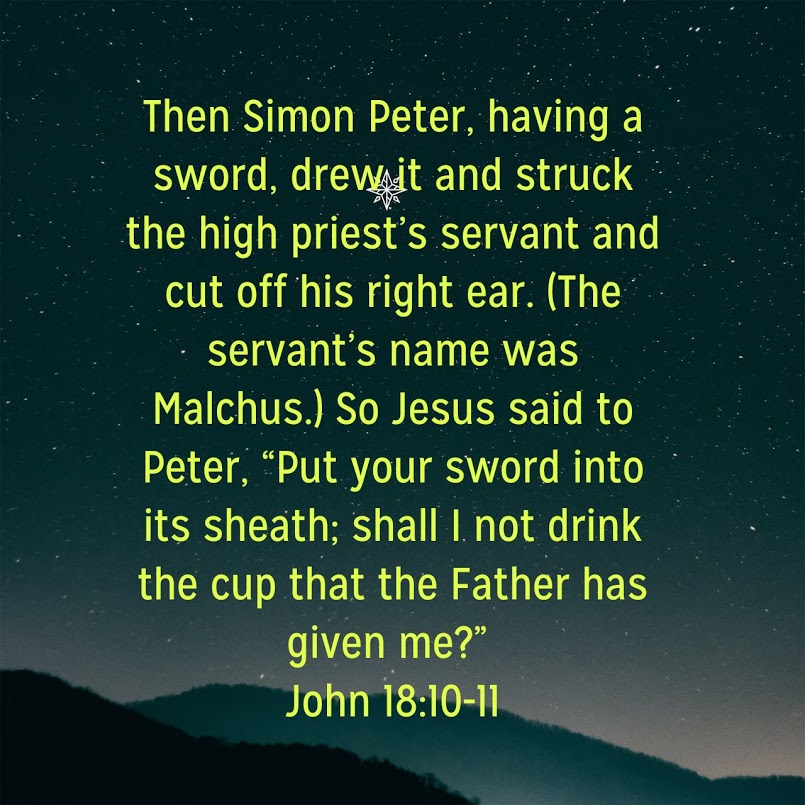
“Then Simon Peter, having a sword, drew it and struck the high priest’s servant and cut off his right ear. (The servant’s name was Malchus.) So, Jesus said to Peter, “Put your sword into its sheath; shall I not drink the cup that the Father has given me?”
John 18:10-11
These Bible passages are set in the Garden of Gethsemane. Jesus has just been betrayed by Judas, and the temple guards are there to arrest Him. The tension in the air was so thick you could cut it with a knife.
Always outspoken and quick to act, Peter decides to take a stand against the authorities who have come to arrest Jesus. Peter draws his sword from its sheath and takes a swing at the High priest’s servant, Malchus. Peter was probably aiming at the servant’s head and thankfully missed, cutting off his ear.
In Luke’s Gospel, Jesus immediately heals Malchus’ ear. Why would He do that?
- It was the right thing to do, no matter what the circumstances were at that moment.
- What Peter did was wrong. He attempted to murder someone. Jesus’ healing of Malchus corrects Peter’s angry gesture.
- In both accounts (Luke and John), Jesus tells Peter and the disciples to stop.
In John’s Gospel, Jesus says, “Put your sword into its sheath; shall I not drink the cup that the Father has given me?”
- Jesus had a destiny to fulfill. It was to suffer and die. God had given Jesus an assignment, ‘You are the sacrificial lamb for all of mankind.’
Jesus could not and would not allow anything to stand in the way of His destiny as Savior of the world. He must suffer, die, be buried, and rise again from the dead to save us from our sins.
Dear Jesus. You traveled the road to the cross without once complaining or detouring from Your designated path. Thank you for your sacrifice. Please help us to never act out of anger towards others and always stay on the path that the Holy Spirit has set us upon. Amen.
 joegministries.com