
The Miracles of Jesus
Lent – March 22, 2024
Jesus heals 10 men of Leprosy
“Only one returned.”
Luke 17:11-19
Leprosy (Hansen’s disease) is a chronic, curable infectious disease, mainly causing skin lesions and nerve damage.
Leprosy is caused by infection with the bacterium Mycobacterium leprae. It mainly affects the skin, eyes, nose, and peripheral nerves.
Symptoms include light-colored or red skin patches with reduced sensation, numbness, and weakness in hands and feet.
Leprosy can be cured with 6-12 months of multi-drug therapy. Early treatment avoids disability.
But wait, there’s more!
Very rare
Fewer than 20,000 US cases per year
Treatable by a medical professional
Spreads by airborne droplets, does that sound familiar? (COVID 19)
Requires a medical diagnosis
Lab tests or imaging are often required
Chronic: can last for years or be lifelong
(CDC.org)
**************The Point***********
Let’s look at Jesus healing ten men of Leprosy.
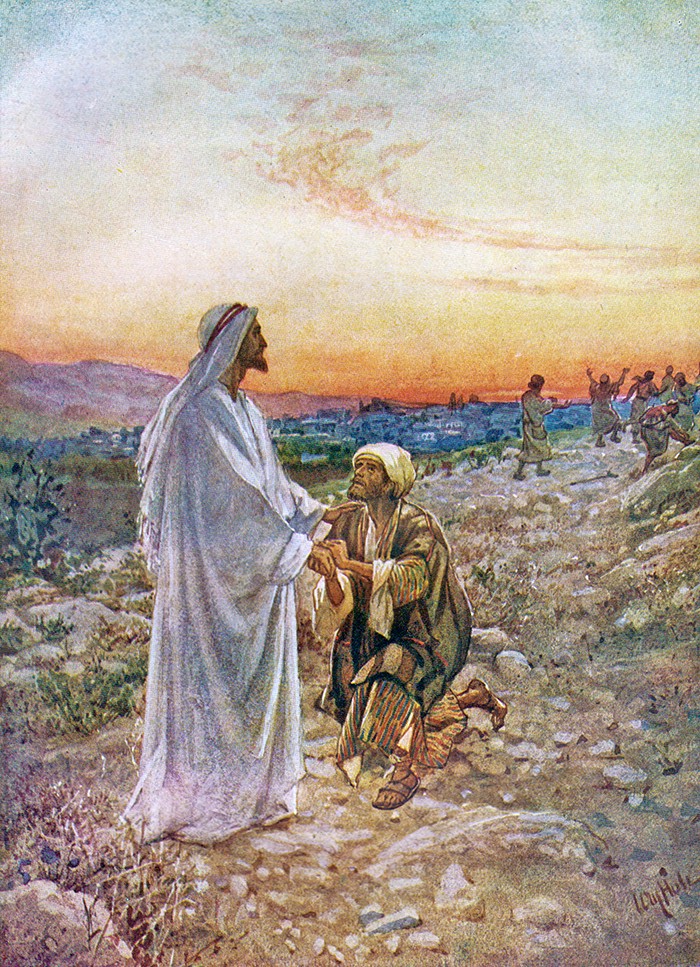
“As Jesus continued on toward Jerusalem, he reached the border between Galilee and Samaria. As he entered a village there, ten men with Leprosy stood at a distance, crying out, “Jesus, Master, have mercy on us!”
He looked at them and said, “Go show yourselves to the priests.” And as they went, they were cleansed of their Leprosy.
One of them, when he saw that he was healed, came back to Jesus, shouting, “Praise God!” He fell to the ground at Jesus’ feet, thanking him for what he had done. This man was a Samaritan.
Jesus asked, “Didn’t I heal ten men? Where are the other nine? Has no one returned to give glory to God except this foreigner?” And Jesus said to the man, “Stand up and go. Your faith has healed you.”
Luke 17:11-19
In Jesus’ time, people with Leprosy were shunned and made to live in colonies outside of the main cities. At that time, it was incurable, and you would eventually die from the disease.
Because of their disease, lepers were considered unclean. Only after being declared clean by a priest could a leper re-enter society once again.
Okay. That’s your history lesson for the day. I think it’s essential that you know what disease Jesus cured.
Whether it was the one or ten lepers, everyone, including the disciples, probably would have backed away from the leper(s). So, for Jesus to come close to them, let alone touch them, was unthinkable.
We know from the story in Luke 5 that Jesus had cleaned a man of Leprosy earlier in His ministry. This one man who was healed was probably a Jew. In this second healing of Leprosy, Jesus heals not one but ten men who ask for mercy (pity).
So, Jesus sent them to the priests, and all ten were healed while they were traveling.
We find out in the reading that one of the lepers is a Samaritan, a foreigner. It is presumed that the other nine lepers are Jews.
(Why do you think only one of the ten returned to say thank you and praise Jesus, and that one was a Samaritan?)
(A little Samaritan background)
Jews generally looked upon Samaritans as “ethnic and religious half-breeds.” (Serendipity Bible)
The Samaritans were half-Jew and half-Gentile. The race came about after the Assyrian captivity of the northern kingdom of Israel in 721 B.C. Certain people from the nation of Israel stayed behind. These people intermarried with the Assyrians, producing the Samaritans. They had no dealings with Jews.
Don Steward, Blue Letter Bible).
In Luke 9, a Samaritan Village did not welcome Jesus and His disciples. Yet, one chapter later, Jesus tells the story of the Good Samaritan. In John 4, Jesus talks to the Woman at the well. She is a Samaritan, and after speaking to Him, she comes to faith in Christ. In our reading of the ten lepers, the one who comes back to Jesus and gives thanks is a Samaritan.
(What’s the point Jesus is trying to make concerning Samaritans?)
Jesus wants us to understand that the message of the Gospel goes beyond racial barriers; it breaks them down. The Gospel of Jesus Christ is for everyone.
Our job as Christians is to “Go and make disciples of all nations.” (Matthew 28). It seems like it should be easy for us to do that. The church sends missionaries worldwide to do just that and spread the news of Jesus Christ.
Here’s the tricky part for many!
It seems much more difficult for many people (yes, even Americans) to bring and share the love of Christ’s Gospel with our neighbors. The neighbors and people we encounter daily who speak a different language have a different skin color, values, or customs than we do.
(Why do you think this is so hard for us to do?)
A lone Samaritan leper comes back to Jesus and says, thank you. The nine Jews don’t. Everyone needs to know the love that Jesus offers, no matter who or where they come from. We can give this message to others, not just through God’s Word but also through our actions.
Finally, always follow Jesus’ final command:
“Go therefore and make disciples of all nations, baptizing them in the name of the Father and of the Son and of the Holy Spirit, teaching them to observe all that I have commanded you. And behold, I am with you always, to the end of the age.”
Matthew 28:19-20
Dear Jesus. You are The Great Physician. You continue to heal those who come to you with ailments in their prayers. Please help us to be more like the 10th leper. We sometimes need to be reminded of all the beautiful things you do for us daily. Finally, we acknowledge that you came to save everyone and that our job is to go out into the world and share the Gospel’s Good News with everyone. Amen
 joegministries.com