
The Miracles of Jesus
Lent – March 17, 2024
The Fifth Sunday in Lent
Why do we fast?
Matthew 6:16-18; 4:1-2

While serving at a church in Fort Myers, FL., as a Youth Minister, my students and I participated in World Vision’s 30-Hour Famine.
As I recall, we participated in the event several times over five years. The 30-Hour Famine is a fundraiser for needy children around the world. The event is packed with many activities and Bible studies, which we did as part of a lock-in. There was one caveat to participating in the Famine: You don’t eat for 30 hours.
My youth always did a great job of fund-raising for the event. But I did have a few moaners when it came to not being able to eat. I must admit, once you got about 20 to 24 hours into the event, your body definitely got sluggish.
I always ended the event with a worship service. All of the students’ parents and congregation members were invited. Immediately after the service, we would ‘Break-Fast.’ I would set it up with the parents to bring casseroles, desserts, etc., for our first meal in 30 hours.
Overall, the 30-Hour Famine was a great event. The students grew in their relationships with each other, learned what it was like to be truly hungry, and raised funds for needy children worldwide.
**********************The Point******************
During His sermon on the mount, Jesus talks explicitly about fasting in Matthew chapter 6.
“And when you fast, do not look gloomy like the hypocrites, for they disfigure their faces that their fasting may be seen by others. Truly, I say to you, they have received their reward. But when you fast, anoint your head, and wash your face, that your fasting may not be seen by others but by your Father who is in secret. And your Father who sees in secret will reward you.”
Matthew 6:16-18
In the sermon on the Mount, Jesus gives three examples of “acts of righteousness.”
- The first is giving to the poor.
This includes giving them money and help in other ways, such as clothing, medical attention, etc.
- The second is prayer.
In Matthew 6, Jesus gave us an outline of prayer. We call it the Lord’s Prayer.
He also told us to pray in private and not make a big show of it like the religious leaders of the day.
- That being said, praying corporately in church or during a group Bible study is okay.
- Jesus’ point is that we need alone time to commune with God, praying one-on-one to Him.
- The third is fasting.
Like in prayer and giving to the poor, Jesus is particular in saying not to make a show of it if you fast.
- The religious leaders of Jesus’ day would fast 2 times a week. There’s nothing wrong with doing that.
- But they habitually walked through the streets while fasting, letting everyone know how much they were suffering. They wanted the people to be impressed.
- Perhaps it did impress some people, but that kind of seeking of attention never impresses God.
So, I guess the question that is most asked is, why do we fast? During the Christian season of Lent, many people (it’s not mandatory) fast from certain foods or activities. Lent is a remembrance of Jesus’ 40 days and nights in the wilderness (Not including Saturdays and Sundays) immediately after He was baptized.
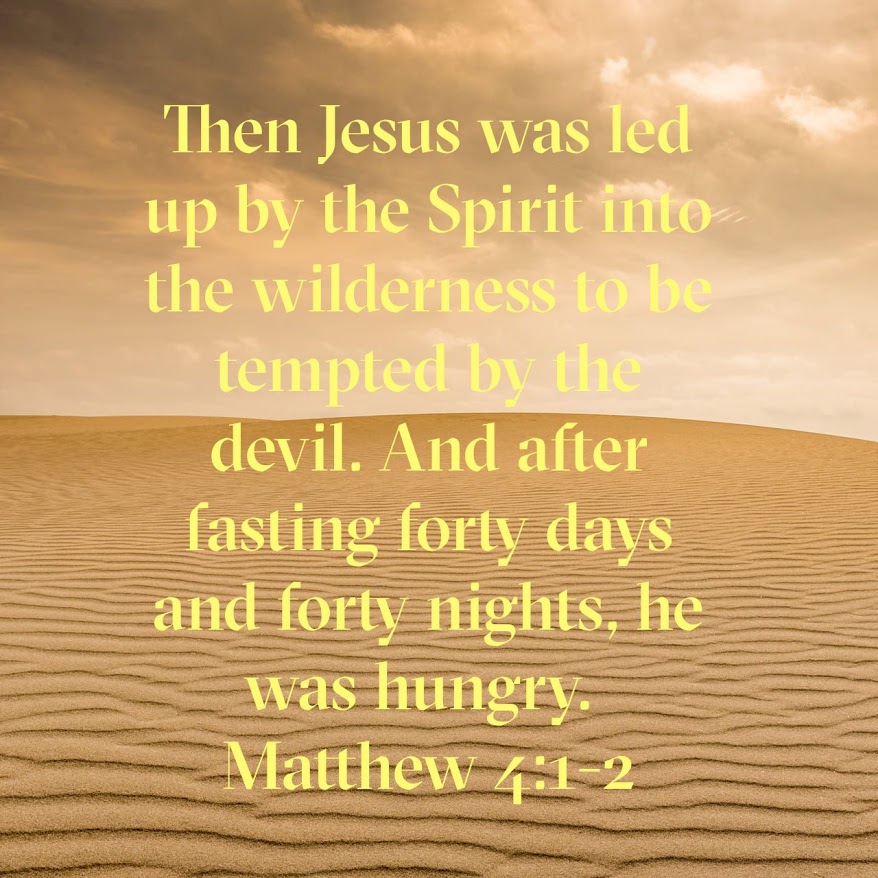
As I mentioned earlier, fasting can cause fatigue, hunger, and sometimes even crankiness. But that wasn’t the case for Jesus. He fasted and was strong enough to resist the devil’s temptation several times.
There are some good reasons to fast occasionally; in his book “The Gospel of Matthew,” William Barclay names five.
The Gospel of Matthew, Vol. 1 by William Barclay (1958-05-03), Volume one, PP. 229-230
- First: The value of self-discipline
We learn to control our feelings (hunger) and overcome our weakness
- Second: The release from slavery to habit
Fasting is a great way to break a habit. You may eat too much candy. Give up eating for a while. Or, as the saying goes, do anything for 21 days, and you have created a habit.
- Third: The preservation of the ability to do without things
We live in a world of needs and wants. Many of the things we feel are needs are actually wants. “I need those new shoes,” or “I need to drink coffee all day just to keep going.” The coffee example sounds like you’ve developed a bad habit that has evolved into what you think is a need.
- Fourth: The positive value for health
Doctors often tell us we must give up certain foods or activities to improve our health.
(I wonder if fasting from not exercising is a “thing?”) 😊
- Fifth: The enhancement of our appreciation of things
I’m not sure if giving up smoking is fasting, but I do know when I did 43 years ago, my appreciation for the taste of food increased.
In the New Testament, Jesus does not call upon us to fast. But if you do, make it your thing and not everyone else’s.
Dear Lord. There are times in our lives when it is good to fast. It can make us stronger and give us a better appreciation for the things we have. When we do fast, help us not brag or boast about it. Instead, allow us to quietly understand the benefits we receive through our fast. Amen.
 joegministries.com