
An Overview of Ephesians
By Joe Guagliardo
Ephesians 6:1-9
“Honor and Obey.”
August 23, 2023

The Bible first tells us about honoring our parents in the Ten Commandments.
“Honor your father and your mother, as the Lord your God has commanded you, so that you may live long and that it may go well with you in the land the Lord your God is giving you.”
Deuteronomy 5:16
Paul repeats this commandment once again In Ephesians 6:1-3:
“Honor your father and mother”—which is the first commandment with a promise— “so that it may go well with you and that you may enjoy long life on the earth.”
Paul doesn’t just tell the Ephesians and us to honor our parents, but to do it:
“so that it may go well with you and that you may enjoy long life on the earth.”
Paul is not telling us that our parents will beat us bloody if we disobey them. But he is saying that we face God’s wrath by not honoring and obeying our parents.
“The benefits of our obedience are many. In Proverbs 3:1-2, we are told that obedience will lead to a long and prosperous life. Additionally, in Ephesians 6:1-3, we are told that obedience is a sign of respect and honor. Obeying our parents will result in God’s blessing.
The consequences for disobedience are also significant. In Exodus 20:12, we are told that disobedience will result in a shortened life. When we disobey our parents, we are disobeying God and breaking his commandments.”
https://www.biblelyfe.com/blog/20-bible-verses-about-obeying-your-parents
In today’s reading, Paul discusses being obedient and honorable to parents and how parents should treat their children.
Finally, as it was prevalent and part of the society in Ephesus, Paul discusses how slaves should be obedient to their masters. There is also an expectation that the Master will respectfully treat his or her slaves.
Let’s take a look at today’s verses.
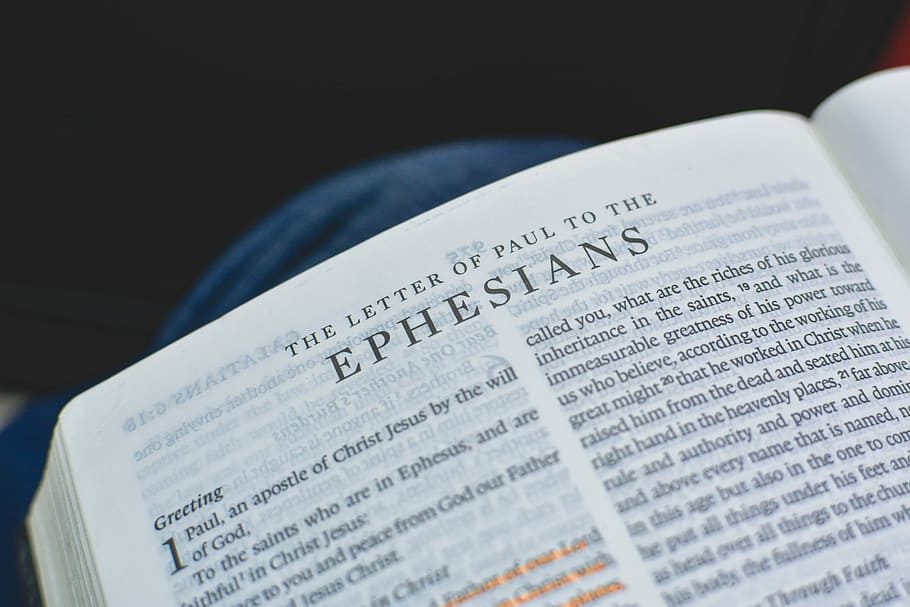
“Children obey your parents in the Lord, for this is right. “Honor your father and mother”—which is the first commandment with a promise— “so that it may go well with you and that you may enjoy long life on the earth.” (6:3 Deut. 5:16)
Fathers,6:4 Or Parents do not exasperate your children; instead, bring them up in the training and instruction of the Lord.
Slaves obey your earthly masters with respect and fear and with sincerity of heart, just as you would obey Christ. Obey them not only to win their favor when their eye is on you but as slaves of Christ, doing the will of God from your heart. Serve wholeheartedly, as if you were serving the Lord, not people, because you know that the Lord will reward each one for whatever good they do, whether they are slave or free.
And masters, treat your slaves in the same way. Do not threaten them since you know that he who is both their Master and yours is in heaven, and there is no favoritism with him.”
Ephesians 6:1-9
As I already discussed the section on children obeying and honoring their parents, let us move on to the next section.
Fathers,6:4 Or Parents do not exasperate your children; instead, bring them up in the training and instruction of the Lord.
The dictionary definition of exasperate is:
“Irritate and frustrate (someone) intensely.”
“Temperamental outbursts and undue harshness on the part of parents can do harm to tender souls.”
(People’s Bible Commentary, Galatians/Ephesians, P.p. 209)
Instead of frustrating our children, Paul calls upon the Galatians and us to:
Bring them up in the training and instruction of the Lord.
The Greek word for training implies discipline and correction. Sure, there are times when “We’ve had it” with our kids. But, if we discipline and correct them properly and bring them up in a Godly household, we will hopefully have success in their upbringing.
Finally, Paul discusses slaves and masters. Obviously, as Christians, we don’t believe in slavery. And, you’ll notice that Paul neither condemns nor condones slavery. But it needs to be addressed as Paul is speaking to new Christians in writing to the Ephesians. This includes slave and Master.
Although slavery was a way of life, both slave and Master needed to be treated in a Christian manner.
Paul tells the slaves to:
Obey your earthly masters with respect and fear and with sincerity of heart, just as you would obey Christ. Obey them not only to win their favor when their eye is on you but as slaves of Christ, doing the will of God from your heart. Serve wholeheartedly, as if you were serving the Lord, not people, because you know that the Lord will reward each one for whatever good they do, whether they are slave or free.
Earthly slavery is a temporary circumstance. Paul is telling slaves to make the best of it. And by obeying, respecting, and fearing their earthly masters, their heavenly reward is much better than any earthly reward they could receive.
At the same time, Paul doesn’t forget the masters.
And masters, treat your slaves in the same way. Do not threaten them since you know that he who is both their Master and yours is in heaven, and there is no favoritism with him.”
Paul tells the Galatian Christian slave owners to treat their slaves with respect. God in heaven is the Master of both slave and slave owners. He shows no favoritism towards either one. His expectations toward one group of people are the same as they are toward another.
“Everything will be properly sorted out on judgment day.”
(People’s Bible Commentary, Galatians/Ephesians, P.p. 212)
(Read Matthew 25:31-46; The Sheep and the Goats)
 joegministries.com